
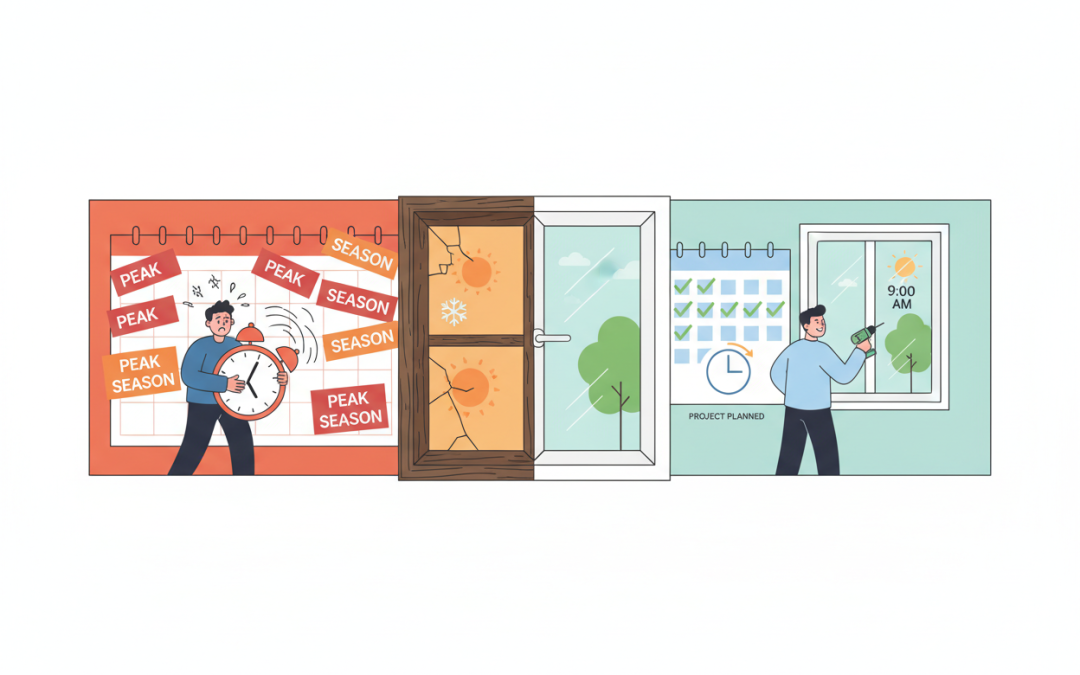
Window Replacement Scheduling: Avoiding Peak Season Delays
If you’ve ever tried to book a contractor during spring or summer, you know the frustration of hearing “We’re booked solid until October.” Window replacement projects face the same seasonal bottlenecks that plague most home improvement endeavors. The key to getting your windows replaced on your timeline – not the contractor’s – lies in understanding when to schedule and how to navigate the industry’s busiest periods.
Smart homeowners who plan ahead can save thousands of dollars, get better service, and avoid the stress of living with drafty windows through another harsh winter. Let’s dive into the strategic approach that will put you ahead of the crowd.
Understanding Peak Season Patterns in Window Replacement
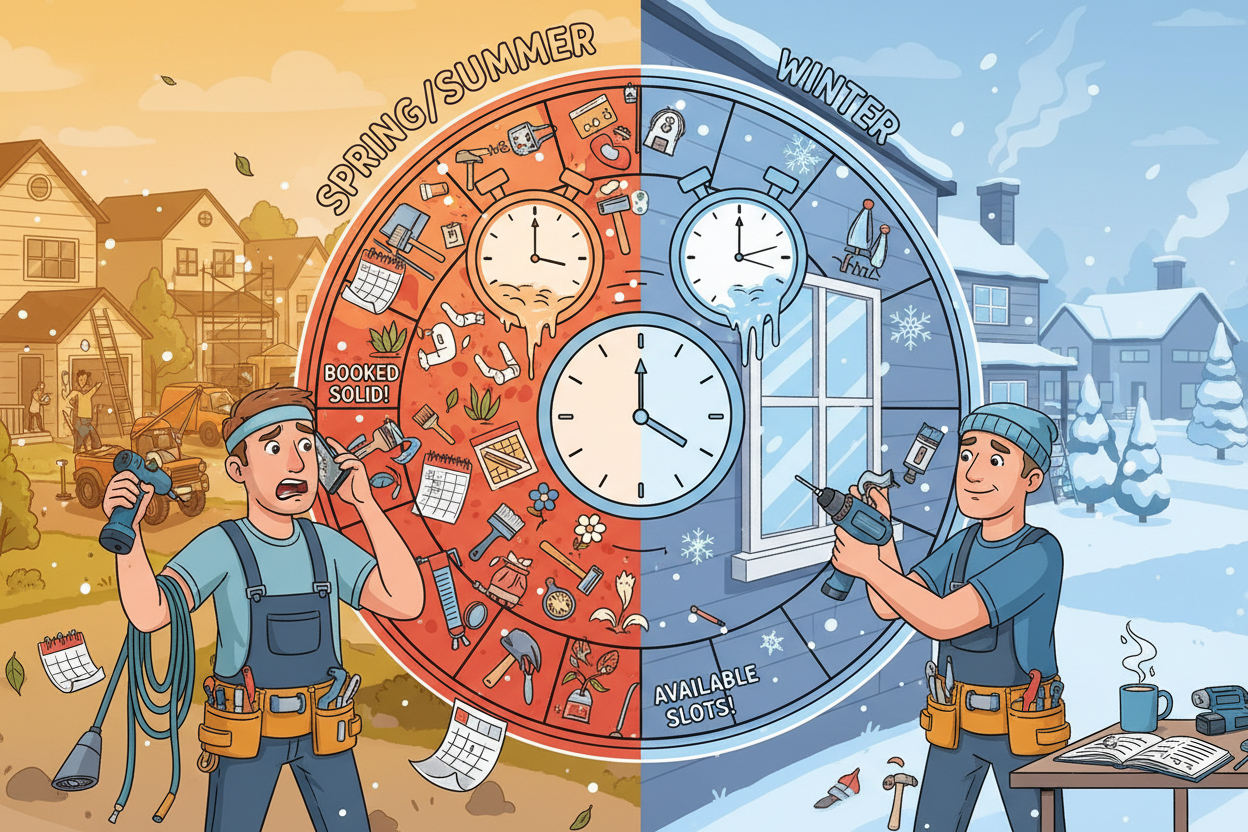
The window replacement industry follows predictable seasonal patterns that mirror general construction trends. Spring kicks off the busy season as homeowners emerge from winter hibernation, suddenly aware of every draft and foggy pane that made the cold months miserable. By late spring, contractors’ schedules fill up faster than a leaky window frame during a rainstorm.
Summer represents the absolute peak, when everyone wants their projects completed before the kids go back to school. Fall brings a second wave of urgency as people rush to weatherize before winter arrives. This creates a perfect storm of high demand, limited availability, and inflated prices that can derail even well-intentioned home improvement plans.
Weather plays a crucial role in these patterns too. Contractors prefer working in mild, dry conditions, making spring and early fall the sweet spots for installation quality. However, this preference concentrates demand into relatively narrow windows of time, creating the scheduling bottlenecks that frustrate homeowners.

The Hidden Costs of Peak Season Window Installation
Waiting until peak season doesn’t just mean scheduling headaches – it hits your wallet hard. During busy periods, contractors can charge premium rates because demand far exceeds supply. You might pay 15-30% more for the same windows and installation during peak season compared to off-season pricing.
Beyond the direct cost increase, peak season scheduling often forces compromises that cost you in other ways. Rushed installations become more common as crews try to squeeze in as many jobs as possible. Quality can suffer when installers feel pressure to move quickly to the next appointment. You might also find yourself accepting lower-quality materials or less experienced crews simply because that’s what’s available.
The opportunity cost adds up too. Every month you delay means another month of higher energy bills from inefficient windows. If you’re planning to sell your home, peak season delays could push your window project past your listing date, potentially impacting your home’s market appeal and value.
Strategic Timing: When to Schedule Your Window Replacement
The savvy homeowner’s secret weapon is counter-seasonal scheduling. Late fall through early spring represents the golden opportunity for window replacement projects. November through February typically offers the best combination of contractor availability, competitive pricing, and focused attention to your project.
Yes, you’ll hear concerns about winter installations, but modern window replacement techniques and materials make cold-weather installation perfectly viable. Professional installers work efficiently to minimize heat loss during the process, often completing single-window replacements in under an hour. Many companies actually prefer winter work because they can dedicate their best crews to fewer projects, resulting in higher quality installations.
Early spring scheduling (March through early April) offers another strategic window. You’ll catch contractors as they’re ramping up for busy season but before their schedules become completely packed. This timing often provides a sweet spot of reasonable pricing with good availability.
How to Secure Priority Scheduling During Busy Periods
Sometimes life doesn’t cooperate with ideal timing. Emergency replacements, sudden home sales, or delayed decision-making might force you into peak season scheduling. When this happens, strategic planning becomes even more critical.
Start by getting quotes and booking consultations in late winter, even if you’re not planning installation until summer. Many contractors will lock in pricing and reserve installation slots months in advance. This early commitment often comes with better rates and guaranteed scheduling.
Consider flexible timing as a negotiating tool. Contractors love customers who can accept installation dates on short notice when other jobs fall through or reschedule. Being flexible with your timeline often translates to better pricing and faster service.
Building relationships with contractors during their slow season pays dividends later. A contractor who completed a small winter project for you is more likely to squeeze you into their packed summer schedule when you need additional work done.
Off-Season Advantages: More Than Just Lower Prices
Off-season window replacement offers benefits that extend far beyond cost savings. During slower periods, you’ll typically work with the contractor’s most experienced crews rather than seasonal help brought on to handle peak demand. This often translates to better craftsmanship and more attention to detail.
Customer service improves dramatically during off-peak periods. Contractors have time for thorough consultations, detailed explanations of options, and careful project planning. You’re not just another rushed appointment in an overpacked schedule – you’re a valued customer receiving focused attention.
Material availability becomes less of an issue during off-season. Special orders, custom sizes, and premium materials that might face long lead times during peak season often ship much faster when demand is lower. This means you can choose exactly what you want rather than settling for what’s immediately available.
Planning Your Window Replacement Project Timeline
Successful window replacement starts with realistic timeline planning. Begin your research and contractor vetting process at least three months before your desired installation date – six months if you’re aiming for peak season installation.
Use the first month for education and initial consultations. Research window types, energy efficiency ratings, and style options. Schedule consultations with three to five contractors to compare approaches, pricing, and availability. This groundwork prevents rushed decisions later.
Month two should focus on decision-making and detailed planning. Choose your contractor, finalize window selections, and confirm installation dates. Use this time to secure permits if required and prepare your home for the installation process.
The final month before installation should be dedicated to final preparations and confirmations. Confirm delivery schedules, prepare the installation areas, and establish clear communication channels with your contractor for any last-minute coordination needs.
Working with Contractors: Communication Strategies for Better Scheduling
Clear communication with contractors makes the difference between smooth scheduling and frustrating delays. Start conversations by being upfront about your timeline flexibility and constraints. Contractors appreciate customers who understand the challenges of seasonal scheduling and work collaboratively to find solutions.
Ask specific questions about their scheduling practices. How far in advance do they book? Do they maintain waiting lists for cancellations? What’s their policy for weather delays? Understanding their processes helps you work within their systems more effectively.
Establish clear expectations about project timelines and communication. Will they provide advance notice of installation dates? How will they handle unexpected delays? What’s the protocol for weather-related rescheduling? Getting these details sorted upfront prevents misunderstandings later.
Consider offering incentives for off-peak scheduling. Some contractors will negotiate better pricing or faster scheduling for customers willing to be flexible with timing. Cash payments, referrals, or bundling multiple projects can also improve your priority status.
Emergency Situations: When You Can’t Wait for Ideal Timing
Sometimes windows fail catastrophically, leaving you no choice but to seek immediate replacement regardless of seasonal timing. Broken glass, failed seals causing major condensation problems, or security issues require urgent attention even during peak season.
In emergency situations, focus on temporary solutions that buy you time for proper planning. Emergency board-up services, temporary window film, or quick-fix repairs might allow you to delay full replacement until more favorable scheduling and pricing become available.
When immediate replacement is unavoidable, cast a wide net for contractors. Smaller companies or newer businesses might have more availability than established firms with packed schedules. Be prepared to pay premium pricing but negotiate where possible – emergency work commands higher rates, but you can still compare options.
Consider partial solutions for emergencies. Replacing only the most critical windows immediately while scheduling the rest for off-peak installation can balance urgent needs with smart timing for the majority of your project.
Frequently Asked Questions
Q: Is it really safe to install windows during winter months?
A: Yes, professional window installers work year-round and have techniques to minimize heat loss during installation. Modern installation methods allow most single windows to be replaced in under an hour, limiting exposure time. Many contractors actually prefer winter work because they can focus on quality without rushing between multiple jobs.
Q: How much money can I save by scheduling window replacement during off-peak season?
A: Off-season savings typically range from 15-30% compared to peak season pricing. This includes both material costs and labor rates. Additionally, you’ll often receive better service and have access to a wider selection of materials, adding value beyond direct cost savings.
Q: When should I start planning my window replacement project?
A: Begin planning at least three months before your desired installation date, or six months if you need peak season installation. This timeline allows for proper research, multiple contractor consultations, and securing your preferred installation dates without rushing decisions.
Q: What if my contractor cancels or reschedules my installation?
A: Establish clear communication expectations and cancellation policies upfront. Reputable contractors will provide reasonable notice for rescheduling and work with you to minimize disruption. Having backup contractors identified during your initial research phase provides alternatives if your primary choice falls through.
Q: Can I get the same quality installation during off-peak season?
A: Often, off-season installations receive higher quality attention because contractors aren’t rushing between multiple jobs. You’ll typically work with experienced crews rather than seasonal help, and installers have more time to address any complications that arise during the project.
Q: Should I replace all windows at once or do it in phases?
A: This depends on your budget and timeline. Replacing all windows at once often provides better pricing per window and ensures consistent appearance and performance. However, phasing the project over multiple off-peak seasons can spread costs and allow you to take advantage of off-season pricing multiple times.




Home replacement window companies Randolph Texas














Affordable home window replacement Red Oak Texas













How much does it cost for vinyl replacement windows Muenster Texas


Affordable home window replacement Southlake Texas