
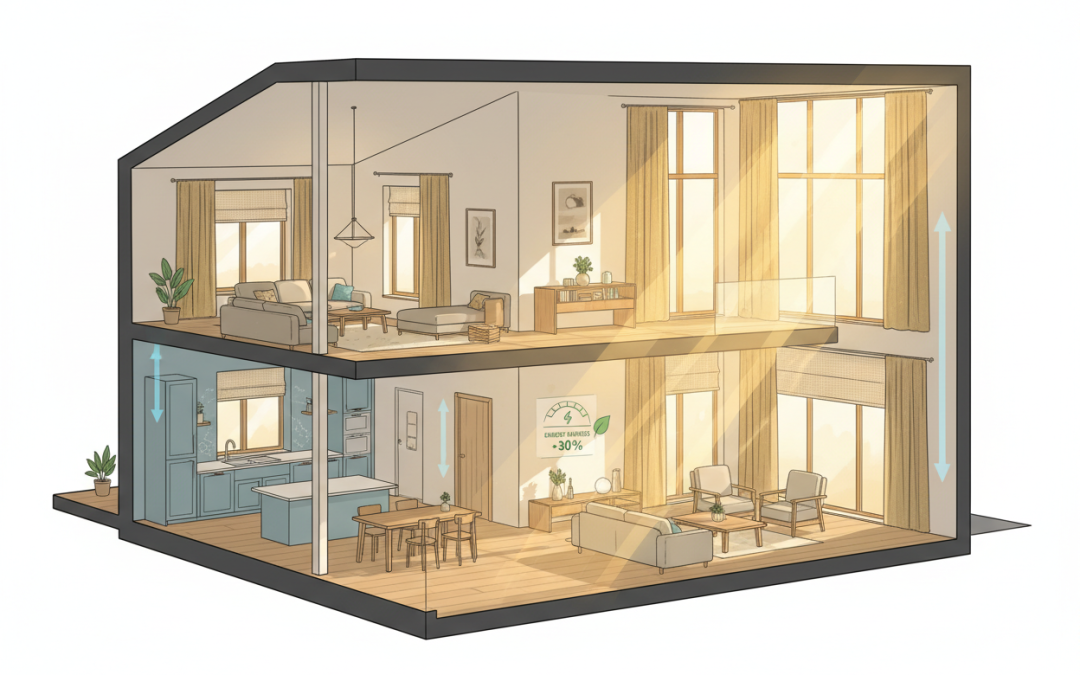
How to Maximize Energy Savings with Strategic Window Placement
When I first moved into my century-old home, I was shocked by the energy bills. The beautiful bay windows that initially charmed me were actually working against my wallet, letting precious heat escape during winter and turning my living room into a greenhouse during summer. That’s when I discovered the incredible impact that strategic window placement can have on energy efficiency.
Window placement isn’t just about aesthetics or views – it’s one of the most powerful tools in your energy-saving arsenal. The right positioning can reduce your heating and cooling costs by up to 40%, while poor placement can turn your home into an energy vampire that drains your bank account month after month.
Understanding Solar Orientation and Your Home’s Energy Profile
Before diving into specific strategies, you need to understand how the sun interacts with your home throughout the day and seasons. This knowledge forms the foundation of effective window placement for maximum energy savings.
The sun rises in the east, travels across the southern sky, and sets in the west. During winter, the sun follows a lower arc, while summer brings a higher, more overhead path. This predictable pattern creates opportunities to harness natural heating in cold months while minimizing unwanted heat gain during hot weather.
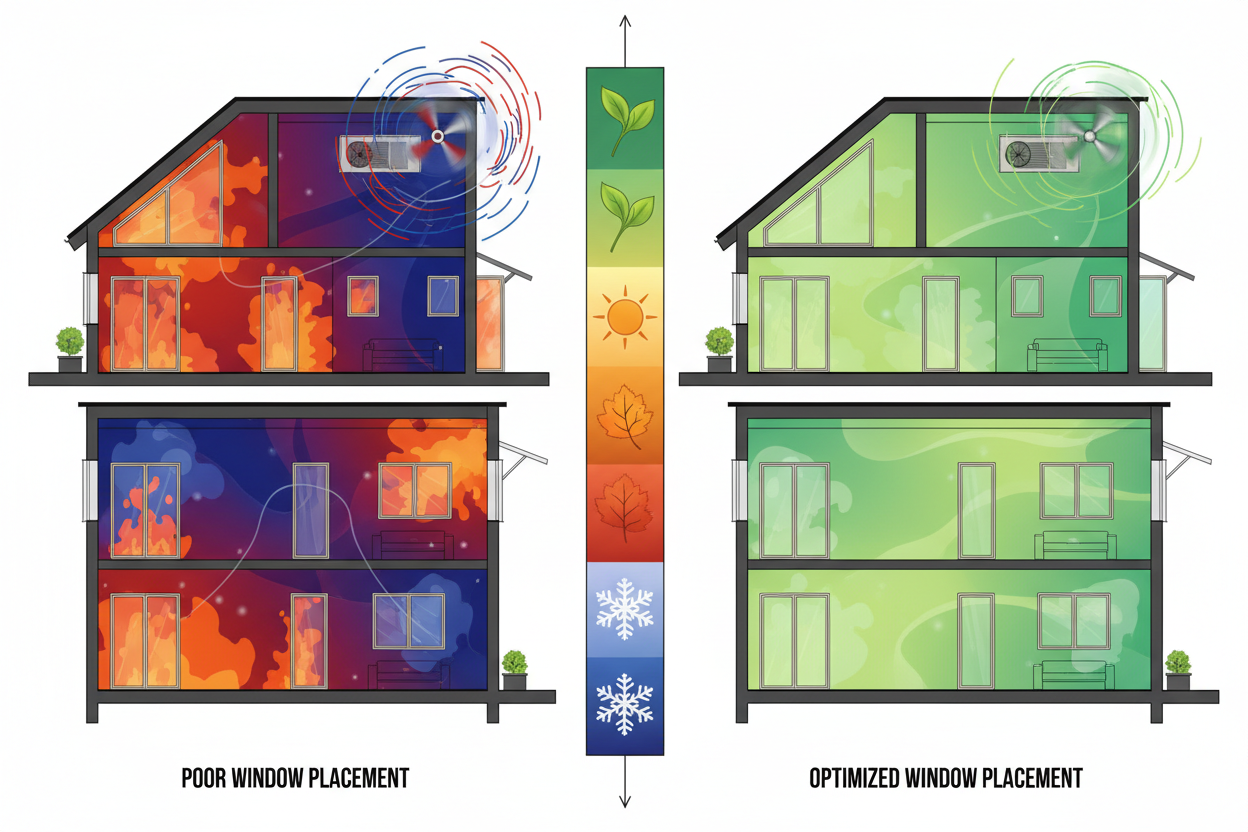
South-facing windows receive the most consistent sunlight throughout the year, making them ideal for passive solar heating. East-facing windows capture gentle morning light, while west-facing windows can become problematic due to intense afternoon sun. North-facing windows provide steady, indirect light with minimal heat gain or loss.
Optimizing South-Facing Windows for Maximum Winter Heat Gain
South-facing windows are your home’s solar collectors. During winter months, these windows can provide substantial free heating when positioned correctly. The key is maximizing the window area on your home’s south side while ensuring proper shading for summer months.
For optimal winter performance, position larger windows on the south wall and ensure they’re unobstructed by trees, buildings, or other structures between 9 AM and 3 PM. This six-hour window represents peak solar gain potential. Consider installing floor-to-ceiling windows or adding additional south-facing windows during renovations to capture maximum winter sun.
The thermal mass principle works beautifully with south-facing windows. Place dense materials like stone floors, concrete walls, or tile surfaces where winter sunlight will strike them. These materials absorb heat during the day and slowly release it throughout the evening, extending your natural heating benefits well past sunset.
Managing East and West Window Challenges
East and west-facing windows present unique challenges that require different strategies. Eastern windows welcome gentle morning sun, which can help warm your home naturally as temperatures are typically coolest. However, western windows face the brutal afternoon sun, often creating uncomfortable hot spots and driving up cooling costs.
For east-facing windows, embrace the morning light but prepare for rapid heat loss once the sun moves on. These windows work well in bedrooms and breakfast areas where morning warmth is welcome. Consider slightly smaller window sizes on the east side compared to your south-facing installations.
West-facing windows demand careful consideration. If possible, minimize window area on western walls, especially in climates with hot summers. When west-facing windows are necessary, invest in high-performance glazing and plan for substantial shading solutions. The afternoon sun strikes these windows at a lower angle, making traditional overhangs less effective than vertical shading elements.
Strategic Shading Solutions That Work Year-Round
Effective shading is crucial for maximizing energy savings through strategic window placement. The goal is blocking summer sun while allowing winter sun to enter freely. This requires understanding sun angles and implementing solutions that adapt to seasonal changes.
Overhangs and awnings work exceptionally well for south-facing windows. Calculate the overhang depth based on your latitude – generally, the overhang should extend out from the wall a distance equal to half the window height. This mathematical approach ensures summer sun stays out while winter sun penetrates deeply into your living space.
Deciduous trees planted strategically around your home provide natural seasonal shading. These living air conditioners block summer sun with their full canopy while allowing winter sun through bare branches. Plant larger shade trees 15-25 feet from south and west-facing windows for optimal performance without overwhelming your home’s foundation.
For immediate results, consider exterior window treatments like retractable awnings, exterior shutters, or shade screens. These solutions can reduce heat gain by up to 77% while maintaining your view and natural light. Interior treatments, while less effective than exterior options, still provide meaningful energy savings when exterior solutions aren’t feasible.
Window Size and Placement Guidelines for Different Climates
Climate plays a crucial role in determining optimal window placement strategies. What works in Minnesota won’t necessarily work in Arizona, and understanding these regional differences can significantly impact your energy savings.
In heating-dominated climates, maximize south-facing window area while minimizing north-facing windows. The general rule suggests south-facing windows should comprise 40-60% of your total window area. East and west windows should be roughly equal, with north-facing windows kept to a minimum for essential lighting needs only.
Cooling-dominated climates require a different approach. Here, you’ll want to minimize overall window area while focusing on north-facing windows for natural light without heat gain. South-facing windows should be smaller and heavily shaded, while east and west windows should be minimized as much as possible. Consider clerestory windows or skylights with proper shading for additional natural light without direct heat gain.
Mixed climates benefit from a balanced approach that considers both heating and cooling needs. Focus on south-facing windows with excellent shading capabilities, moderate east-facing windows, minimal west-facing windows, and strategic north-facing windows for consistent natural light.
Advanced Window Technologies for Enhanced Energy Performance
Modern window technology offers sophisticated solutions that can dramatically improve energy performance regardless of placement. Understanding these options helps you make informed decisions that maximize your energy savings investment.
Low-E coatings represent one of the most cost-effective upgrades available. These microscopically thin metallic layers reflect infrared energy while allowing visible light to pass through. Different Low-E formulations work better for different orientations – high solar gain Low-E for south-facing windows in cold climates, and low solar gain Low-E for west-facing windows in hot climates.
Triple-pane windows provide superior insulation compared to double-pane alternatives, though the energy savings must be weighed against the higher upfront cost. In extreme climates, triple-pane windows on north-facing walls can eliminate cold spots and reduce heating loads significantly.
Dynamic glazing technologies, including electrochromic and thermochromic windows, automatically adjust their properties based on conditions. While currently expensive, these technologies represent the future of responsive building envelopes that optimize energy performance without human intervention.
Measuring and Monitoring Your Energy Savings Success
Implementing strategic window placement is just the beginning – measuring your success ensures you’re achieving the energy savings you expected. Establishing baseline measurements before making changes allows you to quantify improvements and identify areas for additional optimization.
Start by monitoring your monthly energy usage for at least one full year before making window modifications. Note seasonal patterns, peak usage months, and average monthly costs. Many utility companies provide detailed usage histories that can serve as your baseline data.
After implementing window placement strategies, continue monitoring for at least one full year to account for seasonal variations. Look for reductions in peak summer cooling loads and winter heating demands. Smart thermostats and home energy monitoring systems can provide detailed insights into how your changes affect actual energy consumption patterns.
Don’t forget to factor in comfort improvements alongside energy savings. Reduced hot spots, more even temperatures throughout your home, and decreased reliance on mechanical heating and cooling all contribute to the overall value of strategic window placement.
Conclusion: Your Path to Significant Energy Savings
Strategic window placement offers one of the most impactful ways to reduce your home’s energy consumption while improving comfort and natural light quality. By understanding solar orientation, optimizing window placement for your climate, implementing effective shading strategies, and leveraging modern window technologies, you can achieve substantial energy savings that continue paying dividends for decades.
Remember that window placement decisions are long-term investments. While some strategies like exterior shading can be implemented relatively quickly, others like adding new windows or relocating existing ones require careful planning and professional expertise. Start with the most cost-effective improvements and gradually work toward more comprehensive solutions as budget and opportunity allow.
The combination of proper placement, appropriate sizing, effective shading, and modern window technology can transform your home into an energy-efficient sanctuary that works with natural forces rather than against them. Your future self – and your wallet – will thank you for taking action today.
Frequently Asked Questions
Q: How much can I realistically save on energy bills with strategic window placement?
A: Homeowners typically see energy savings of 15-40% when implementing comprehensive window placement strategies. The exact savings depend on your current window configuration, local climate, home size, and specific improvements made. Homes with poor existing window placement often see the most dramatic improvements.
Q: Is it worth replacing existing windows just for better energy efficiency?
A: Window replacement should be evaluated based on the age and condition of existing windows, local energy costs, and available incentives. Generally, if your windows are more than 20 years old or single-pane, replacement often pays for itself through energy savings. However, adding exterior shading or upgrading window treatments might provide better short-term returns.
Q: What’s the most cost-effective window placement improvement I can make right now?
A: Adding exterior shading to west and south-facing windows typically provides the fastest payback. Awnings, shade screens, or strategically planted trees can reduce cooling costs immediately while requiring relatively modest investment compared to window replacement or home modifications.
Q: How do I determine the right window size for each orientation?
A: Window sizing depends on your climate zone, but general guidelines suggest south-facing windows should be 40-60% of total window area in cold climates, with smaller percentages in hot climates. Work with a local energy consultant or architect who understands regional solar angles and climate patterns for specific recommendations.
Q: Can window placement strategies work in existing homes, or only new construction?
A: Many window placement strategies work excellently in existing homes. While you might not be able to relocate windows easily, you can add exterior shading, upgrade window performance, optimize interior layouts to take advantage of existing solar gain, and plan strategic improvements during renovation projects.
Q: How long does it take to see energy savings from window placement improvements?
A: You’ll typically notice comfort improvements immediately, especially reduced hot spots and more even temperatures. Measurable energy savings appear in your first full season after implementation, with the most dramatic differences visible during peak heating and cooling months when your system works hardest.



















Black replacement windows Lake Highlands Dallas Texas













How much does it cost for vinyl replacement windows Josephine Texas



Home replacement window companies Seagoville Texas


























North Richland Hills TX Estimate For Siding Replacement