
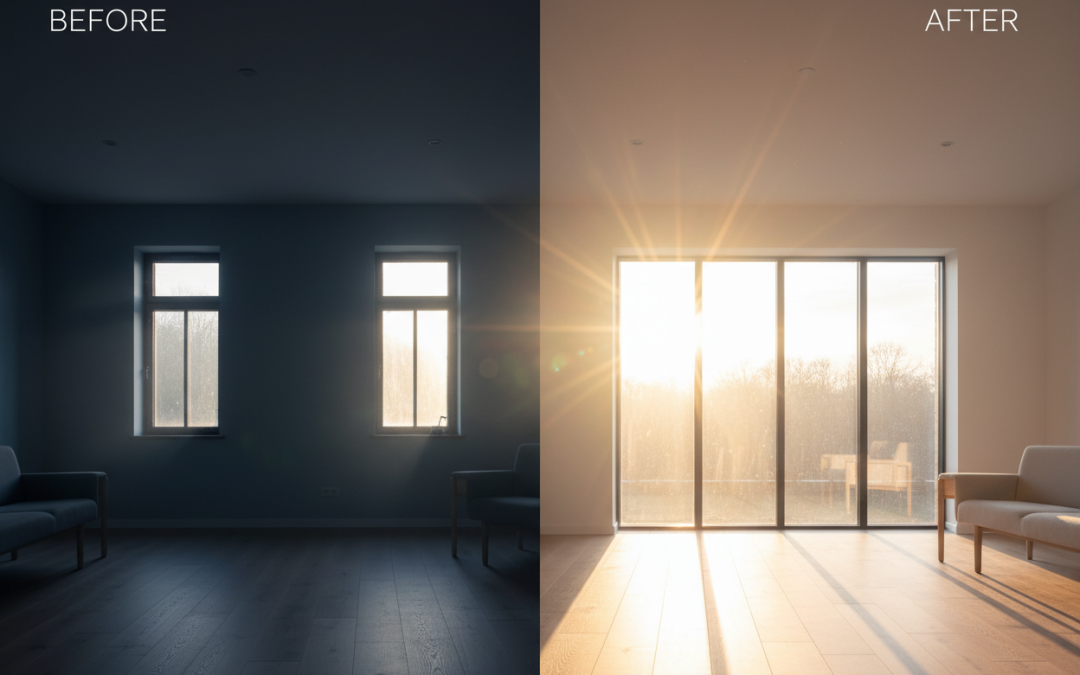
How Window Replacement Affects Your Home’s Natural Lighting
When was the last time you really paid attention to how light flows through your home? If you’re like most homeowners, you probably take your windows for granted until something goes wrong. But here’s the thing – those aging windows might be doing more than just letting in a draft. They could be robbing your home of precious natural light, affecting everything from your mood to your energy bills.
Window replacement isn’t just about improving insulation or boosting curb appeal. It’s about transforming how light interacts with your living spaces. Whether you’re dealing with outdated single-pane windows or simply want to maximize the natural illumination in your home, understanding how new windows can revolutionize your lighting is crucial for making informed decisions about your next home improvement project.
The Science Behind Natural Light and Windows
Natural light doesn’t just magically appear in your home – it’s carefully orchestrated by the design, placement, and quality of your windows. The amount of daylight that enters your space depends on several factors, including window size, glass type, frame materials, and even the cleanliness of the glass surface.
Older windows often feature smaller panes divided by thick muntins, which can significantly reduce the glass-to-frame ratio. This means less surface area for light transmission. Additionally, older glass may have developed a hazy appearance over time, further diminishing its ability to let light pass through clearly.
Modern window technology has revolutionized how we think about natural lighting. Today’s windows can be engineered to maximize light transmission while still providing excellent energy efficiency. Low-E coatings, for instance, allow visible light to pass through while reflecting heat-generating infrared rays, giving you the best of both worlds.
Signs Your Current Windows Are Limiting Natural Light
You might not realize how much your current windows are affecting your home’s brightness until you start paying closer attention. Here are some telltale signs that window replacement could dramatically improve your natural lighting situation.
Do you find yourself reaching for light switches during what should be bright daylight hours? This could indicate that your windows aren’t performing as they should. Foggy or cloudy glass, whether from age or seal failure in double-pane units, acts like a filter that reduces light transmission.
Take a walk around your home during different times of day. Notice areas that feel perpetually dim or require artificial lighting even when the sun is shining brightly outside. These spaces are prime candidates for window upgrades that could transform their lighting conditions.
Another clear indicator is when your neighbors’ homes seem noticeably brighter inside than yours, despite having similar orientations and window sizes. This often points to outdated glass technology or deteriorated window components that are impeding light flow.
Types of Windows That Maximize Natural Light
Not all windows are created equal when it comes to natural light optimization. Understanding your options can help you make choices that will flood your home with beautiful, natural illumination.
Picture windows are champions of natural light. These large, fixed panes offer maximum glass surface area without the interruption of operating hardware or divided panes. They’re perfect for rooms where you want to create a bright, airy atmosphere and don’t need ventilation from that particular window.
Casement windows, which crank open outward, provide excellent light transmission when closed while offering the bonus of superior ventilation when opened. Their single-pane design means no center rail to obstruct the view or block light.
For those who love traditional aesthetics, double-hung windows have evolved significantly. Modern versions can feature much thinner sash profiles than their historical counterparts, maximizing the glass area while maintaining that classic look.
Bay and bow windows deserve special mention for their ability to capture light from multiple angles. These projecting window styles don’t just increase your glass surface area – they actually extend into outdoor space, allowing light to enter from three different directions simultaneously.
Glass Technology and Light Transmission
The type of glass in your windows plays a crucial role in determining how much natural light enters your home. Modern glass technology offers options that seemed impossible just a few decades ago.
Clear, uncoated glass provides the highest visible light transmission, typically allowing about 90% of available light to pass through. However, this comes with trade-offs in terms of energy efficiency and UV protection.
Low-E (low-emissivity) coatings have revolutionized the window industry. These microscopically thin metallic layers can be engineered to allow maximum visible light transmission while reflecting unwanted heat. Some Low-E coatings are specifically designed to prioritize light transmission, making them ideal for homeowners who want bright interiors without sacrificing energy efficiency.
Triple-pane windows, while offering superior insulation, do reduce light transmission compared to double-pane units due to the additional glass layer. However, the difference is often minimal – typically only about 10-15% – and many homeowners find the trade-off worthwhile for the improved comfort and energy savings.
Specialized glass options like low-iron glass can actually increase light transmission beyond standard clear glass by removing the greenish tint that’s naturally present in regular glass. This premium option is particularly popular in contemporary homes where maximum brightness is a priority.
Strategic Window Placement for Optimal Lighting
Sometimes, maximizing natural light isn’t just about replacing existing windows – it’s about rethinking window placement altogether. If you’re planning a major renovation or addition, strategic window placement can dramatically transform your home’s lighting landscape.
South-facing windows are your best friends for consistent, year-round natural light. They receive direct sunlight for most of the day and provide excellent illumination without the harsh glare that can come from east or west-facing windows during sunrise and sunset.
Consider the interior layout when planning window replacement. Removing walls or creating larger openings between rooms allows natural light to flow deeper into your home’s interior spaces. A strategically placed window can illuminate not just the room it’s in, but adjacent areas as well.
Clerestory windows – those high windows often found near the roofline – are excellent for bringing light into interior spaces without compromising privacy. They’re particularly effective in bathrooms, hallways, and other areas where you want light but not necessarily views.
Energy Efficiency vs. Light Transmission Balance
One of the biggest concerns homeowners have about window replacement is finding the right balance between energy efficiency and natural light. The good news is that modern window technology makes it possible to have both.
The key is understanding that energy efficiency and light transmission aren’t mutually exclusive. While it’s true that some energy-efficient features can slightly reduce light transmission, the impact is often much less significant than homeowners expect.
For example, high-quality Low-E coatings can maintain 70-80% visible light transmission while dramatically improving thermal performance. This means you’ll get nearly the same amount of natural light as with clear glass, but with much better energy efficiency.
Window frames also play a role in this balance. Thermally broken aluminum frames or high-quality vinyl frames can provide excellent insulation while maintaining narrow profiles that maximize glass area.
The reality is that most homeowners find the slight reduction in light transmission to be completely acceptable when weighed against the comfort improvements and energy savings that come with high-performance windows.
Impact on Interior Design and Home Value
Natural light is one of the most sought-after features in home design, and for good reason. It has the power to make spaces feel larger, more welcoming, and more connected to the outdoors. When you replace windows with options that maximize natural light, you’re not just improving functionality – you’re enhancing your home’s entire aesthetic appeal.
Brighter spaces allow colors to appear more vibrant and true-to-life. That paint color you’ve been considering might look completely different in a room with improved natural lighting. Many homeowners find that window replacement allows them to use lighter, more sophisticated color palettes that would have appeared washed out in poorly lit spaces.
From a resale perspective, natural light consistently ranks among the top features that homebuyers seek. Real estate professionals often emphasize bright, light-filled spaces in their listings because they know how appealing these features are to potential buyers.
The impact on home value goes beyond just the windows themselves. Homes with excellent natural light often photograph better for online listings, show better during tours, and create that intangible “wow factor” that can make the difference in competitive markets.
Seasonal Considerations and Light Quality
Natural light isn’t constant throughout the year, and your window choices can help you make the most of available light during darker months while managing excess heat and glare during brighter seasons.
During winter months, when daylight hours are limited and the sun sits lower in the sky, every bit of available light becomes precious. Windows with high visible light transmission become particularly valuable during these times, helping to combat seasonal mood changes and reduce reliance on artificial lighting.
Summer presents different challenges, with longer days but potentially harsh glare and unwanted heat gain. Modern window technologies can address these seasonal variations through selective coatings that manage different types of light and heat while maintaining good visibility.
The quality of light also changes throughout the day and seasons. Morning light tends to be cooler and softer, while afternoon light can be warmer and more intense. Understanding these patterns can help you choose window treatments and interior layouts that work harmoniously with your new windows year-round.
Maintenance and Long-term Light Performance
One aspect of natural light that homeowners often overlook is how window maintenance affects light transmission over time. Even the best windows need proper care to maintain their light-transmitting properties.
Regular cleaning is obvious but crucial. Dirty glass can reduce light transmission by 20% or more, effectively negating much of the benefit you’d gain from window replacement. The good news is that modern windows are often easier to clean than older styles, with features like tilt-in sashes that allow you to clean both sides of the glass from inside your home.
Quality windows maintain their performance characteristics much longer than budget alternatives. Cheap windows may develop haze, seal failures, or frame deterioration that gradually reduces their light transmission over time. Investing in quality windows upfront means maintaining optimal light levels for decades to come.
Consider the long-term performance of different window materials. Vinyl windows, for example, won’t rot, warp, or require repainting, which means they’ll maintain their structural integrity and light transmission properties with minimal maintenance.
Conclusion
Window replacement offers one of the most effective ways to transform your home’s natural lighting, creating brighter, more welcoming spaces that enhance both your daily living experience and your property’s value. The key is understanding that maximizing natural light doesn’t mean sacrificing energy efficiency or other important performance characteristics.
Modern window technology provides numerous options for optimizing light transmission while maintaining comfort and efficiency. Whether you choose large picture windows for maximum light, strategically placed casement windows for targeted illumination, or high-performance glass coatings that balance light and energy concerns, the right windows can dramatically improve how natural light flows through your home.
Remember that window replacement is an investment in your daily quality of life. Brighter, more naturally lit spaces can improve your mood, reduce energy costs, and create the kind of welcoming atmosphere that makes a house truly feel like home. As you consider your options, think about how different window choices will affect not just the amount of light, but the quality and distribution of that light throughout your living spaces.
Frequently Asked Questions
How much can new windows improve natural light in my home?
The improvement depends on your current windows, but homeowners typically see a 15-40% increase in natural light with modern replacement windows. Factors like glass type, window size, and frame design all contribute to the final result.
Will energy-efficient windows reduce the amount of natural light?
Modern energy-efficient windows typically reduce light transmission by only 10-20% compared to clear glass, while providing significant improvements in comfort and energy savings. Many homeowners find this trade-off completely acceptable.
What’s the best window style for maximizing natural light?
Picture windows offer the maximum glass area and light transmission since they’re fixed and don’t require operating hardware. However, casement windows and modern double-hung windows with slim profiles also provide excellent light transmission while offering ventilation options.
Can I add more windows during replacement to increase natural light?
Yes, window replacement projects often include enlarging existing openings or adding new windows, though this requires careful consideration of structural requirements and local building codes. Consult with a professional to explore your options.
How do Low-E coatings affect natural light?
High-quality Low-E coatings are designed to allow most visible light through while reflecting heat-generating infrared rays. They typically maintain 70-80% light transmission while significantly improving energy efficiency.
Do triple-pane windows significantly reduce natural light?
Triple-pane windows do reduce light transmission compared to double-pane windows, typically by about 10-15%. However, many homeowners find the superior insulation and comfort benefits worth this modest reduction in light.









How much does it cost for vinyl replacement windows Greenville Texas


















Affordable home window replacement Highland Park Texas










Affordable home window replacement Royse City Texas



Home window replacement near me Royse City Texas





The Colony TX Cost Of Vinyl Siding Replacement








Nevada TX Replacement Siding Installation Services










Springtown TX Replacement Siding Installation Services