
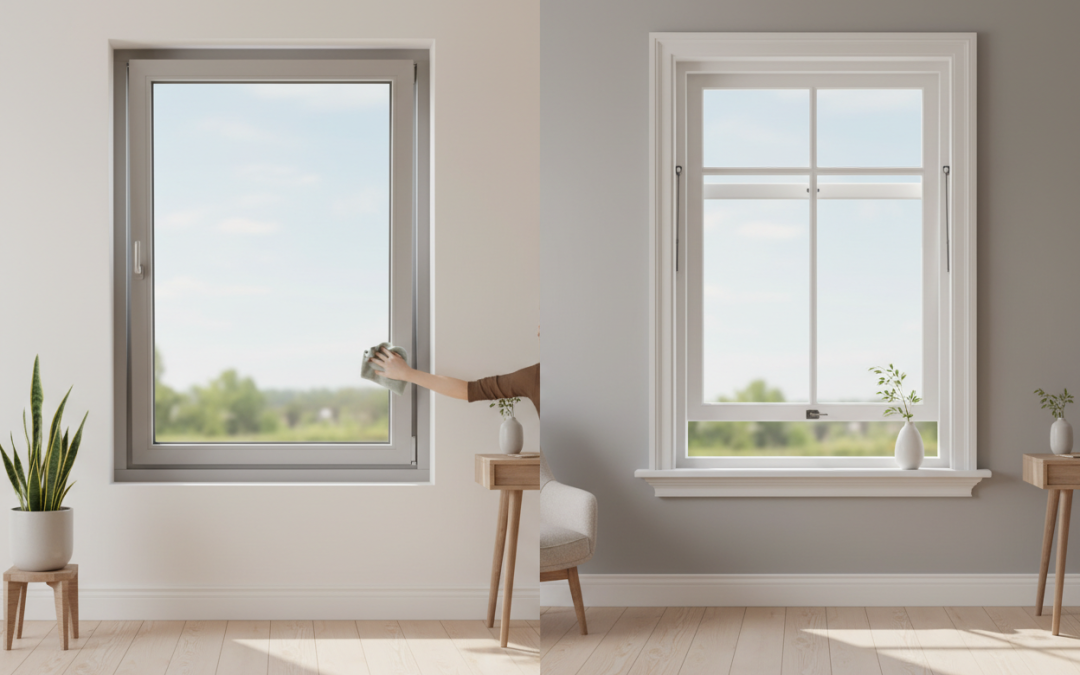
Window Replacement: Choosing Between Tilt-In and Traditional Styles
When it comes to window replacement, homeowners often find themselves standing at a crossroads between modern convenience and classic appeal. The choice between tilt-in windows and traditional styles isn’t just about aesthetics – it’s about functionality, maintenance, energy efficiency, and long-term satisfaction with your investment. Having helped countless homeowners navigate this decision over the years, I’ve seen firsthand how the right window choice can transform both the look and livability of a home.
This comprehensive guide will walk you through everything you need to know about tilt-in versus traditional window styles, helping you make an informed decision that you’ll be happy with for decades to come. Whether you’re renovating an older home or building new, understanding these window types will ensure your replacement project delivers the perfect blend of form and function.
Understanding Tilt-In Windows: Modern Convenience at Your Fingertips
Tilt-in windows represent a significant advancement in window technology, designed with the modern homeowner’s needs in mind. These innovative windows feature a unique mechanism that allows the bottom sash to tilt inward into your home, creating easy access to the exterior glass surface from inside your house.
The engineering behind tilt-in windows is quite remarkable. The window sash pivots on specially designed hinges located at the bottom of the frame, while release mechanisms at the top allow you to unlock and tilt the window with minimal effort. This design breakthrough has revolutionized window maintenance and cleaning, addressing one of the most common complaints homeowners have about traditional windows.
Most tilt-in windows are double-hung style, meaning both the upper and lower sashes can move independently. However, the key differentiator is that tilt-in feature on the lower sash, which transforms an ordinary window into a maintenance-friendly marvel. The mechanism is typically robust enough to handle regular use while maintaining a secure seal when the window is in its normal operating position.
Traditional Window Styles: Time-Tested Appeal and Reliability
Traditional window styles encompass a broad range of designs that have stood the test of time, including standard double-hung, single-hung, casement, and sliding windows. These conventional designs have been refined over generations, offering proven performance and classic aesthetic appeal that complements virtually any architectural style.
Double-hung traditional windows feature two sashes that slide vertically within the frame, while single-hung windows have only a movable bottom sash. Casement windows swing outward on hinges, and sliding windows move horizontally along tracks. Each style has its own character and functional benefits, making traditional windows a versatile choice for various applications throughout your home.
The manufacturing process for traditional windows is well-established, often resulting in competitive pricing and wide availability. Many homeowners appreciate the straightforward operation and the fact that these window styles have been proven reliable across different climates and conditions for many decades.
Maintenance and Cleaning: Where Tilt-In Windows Truly Shine
Perhaps the most compelling advantage of tilt-in windows lies in their maintenance benefits. Anyone who has ever struggled to clean the exterior surface of second-story windows will immediately appreciate the convenience factor. With tilt-in windows, you can access both sides of the glass from inside your home, eliminating the need for ladders, squeegees on extension poles, or professional window cleaning services.
The cleaning process is remarkably simple: unlock the tilt mechanism, gently pull the bottom of the sash toward you, and the window tilts inward at approximately a 90-degree angle. This position provides complete access to the exterior glass surface, allowing you to clean thoroughly with standard household cleaning supplies. The entire process typically takes just minutes per window.
Traditional windows, particularly those on upper floors, present ongoing maintenance challenges. Cleaning exterior surfaces often requires specialized equipment or professional services, especially for windows that are difficult to reach safely. This can result in higher long-term maintenance costs and windows that don’t get cleaned as frequently as they should, potentially affecting both appearance and natural light transmission.
Beyond cleaning, tilt-in windows also make other maintenance tasks more accessible. Weather stripping replacement, hardware adjustments, and minor repairs can often be performed more easily when you can access the window components from inside your home.
Energy Efficiency Comparison: Performance That Impacts Your Bills
Energy efficiency is a critical consideration in any window replacement project, as windows significantly impact your home’s heating and cooling costs. Both tilt-in and traditional windows can achieve excellent energy performance when properly manufactured and installed, but there are some differences worth noting.
Modern tilt-in windows typically feature advanced sealing systems designed to maintain energy efficiency even with the added mechanical complexity of the tilt mechanism. Quality manufacturers use multiple weather seals and precision-engineered components to ensure that the tilt function doesn’t compromise the window’s thermal performance. Many tilt-in windows achieve Energy Star certification and can significantly reduce energy costs compared to older windows.
Traditional windows, particularly newer models, also offer excellent energy efficiency options. The simpler design can sometimes result in fewer potential air leakage points, though this advantage is largely negated in high-quality tilt-in windows. Both window types can incorporate low-E coatings, argon gas fills, and advanced frame materials to maximize energy performance.
The key to energy efficiency in either style lies in proper installation and quality manufacturing. A poorly installed energy-efficient window will underperform compared to a properly installed standard window, regardless of the style you choose.
Installation Considerations and Requirements
Window installation requirements can vary between tilt-in and traditional styles, though both typically fit within standard rough openings. Tilt-in windows may require slightly more precise installation due to their mechanical components, but experienced installers are well-versed in both types.
The installation timeline is generally similar for both window styles, though tilt-in windows might require a few additional minutes per unit to ensure the tilt mechanisms are properly adjusted and tested. This minor time difference is usually negligible in the context of a full window replacement project.
One consideration specific to tilt-in windows is ensuring adequate interior space for the window to tilt inward. While most installations don’t present issues, homes with very deep window sills or interior obstructions might need minor modifications to accommodate the tilt function fully.
Both window styles require proper flashing, sealing, and weatherproofing during installation. The complexity of this work is generally equivalent between the two options, making installation cost differences minimal in most cases.
Cost Analysis: Investment vs. Long-Term Value
The initial cost difference between tilt-in and traditional windows varies by manufacturer and specific features, but tilt-in windows typically carry a modest premium – usually 10-20% more than comparable traditional styles. This upfront investment often pays dividends through reduced maintenance costs and increased convenience over the window’s lifespan.
When calculating the total cost of ownership, consider the long-term savings from easier maintenance. Professional window cleaning services can cost $150-300 annually for an average home, expenses that are largely eliminated with tilt-in windows. Additionally, the ability to perform maintenance tasks yourself can save hundreds of dollars in service calls over the windows’ lifetime.
Resale value considerations also favor modern window features. Home buyers increasingly appreciate low-maintenance features, and tilt-in windows can be a selling point that differentiates your home in a competitive market. While it’s difficult to quantify exact return on investment, modern, convenient features typically contribute positively to home value.
Financing options are generally equivalent for both window styles, with many manufacturers and installers offering similar payment plans and warranties regardless of the specific window type you choose.
Aesthetic Impact and Design Flexibility
Both tilt-in and traditional windows offer extensive design flexibility, available in numerous materials, colors, and configurations. The visual difference between the two styles is often minimal when windows are in their closed position, allowing you to prioritize functionality without sacrificing curb appeal.
Traditional windows offer the advantage of historical accuracy for period homes or specific architectural styles. If you’re renovating a Victorian, Colonial, or other historically significant home, traditional window styles might be necessary to maintain authenticity or comply with local historic district requirements.
Tilt-in windows have evolved to offer classic profiles that closely mimic traditional designs while incorporating modern functionality. Many manufacturers now produce tilt-in windows that are virtually indistinguishable from traditional styles when viewed from the exterior, allowing you to enjoy modern convenience without compromising your home’s aesthetic character.
Grid patterns, hardware finishes, and frame colors are typically available in both window styles, ensuring that your functional choice doesn’t limit your design options. The key is working with a reputable manufacturer that offers extensive customization possibilities.
Making Your Decision: Factors to Consider
Choosing between tilt-in and traditional windows ultimately depends on your specific priorities, lifestyle, and home characteristics. Consider your willingness and ability to perform regular window maintenance, the height and accessibility of your windows, and your long-term plans for the home.
If you value convenience and plan to stay in your home for many years, the maintenance benefits of tilt-in windows often justify the additional investment. Homeowners with mobility limitations or multi-story homes particularly benefit from the easy-cleaning features.
For homes where historical accuracy is paramount or budgets are especially tight, traditional windows remain an excellent choice. They offer proven performance and can provide decades of reliable service when properly maintained.
Consider also your local climate and environmental factors. Homes in areas with frequent storms, high winds, or extreme weather might benefit from the robust sealing systems found in quality tilt-in windows, while homes in mild climates might find traditional windows perfectly adequate.
Conclusion
The choice between tilt-in and traditional window styles represents more than just a functional decision – it’s an investment in your daily comfort and long-term satisfaction with your home. Tilt-in windows offer undeniable convenience advantages, particularly for maintenance and cleaning, while traditional windows provide time-tested reliability and often lower upfront costs.
Both options can deliver excellent energy efficiency, durability, and aesthetic appeal when you choose quality products from reputable manufacturers. The key is honestly assessing your priorities, maintenance capabilities, and long-term plans for your home.
Remember that windows are a long-term investment, typically lasting 20-30 years or more. The convenience of tilt-in windows becomes more valuable over time, while the cost savings of traditional windows are most apparent upfront. Consider not just your current situation, but how your needs and capabilities might change over the coming decades.
Whatever you choose, ensure you work with experienced installers and select windows from manufacturers with strong warranties and customer support. The right windows, properly installed, will enhance your home’s comfort, efficiency, and value for many years to come.
Frequently Asked Questions
Are tilt-in windows more prone to breaking than traditional windows?
Quality tilt-in windows are engineered to be just as durable as traditional windows. The tilt mechanism is designed to handle regular use over many years. However, like any mechanical feature, proper operation and occasional maintenance of the hardware will ensure longevity.
Can I retrofit my existing windows to have tilt-in functionality?
Unfortunately, tilt-in functionality cannot be added to existing traditional windows. The feature requires specific frame design and hardware that must be built into the window during manufacturing. Retrofitting would require complete window replacement.
Do tilt-in windows provide the same security as traditional windows?
Yes, tilt-in windows offer equivalent security when properly locked. The tilt mechanism includes secure locking systems, and when engaged, the window is just as secure as traditional styles. Many tilt-in windows also feature additional security hardware options.
How much interior space do I need for tilt-in windows to function properly?
Most tilt-in windows need approximately 6-8 inches of clear space from the interior window sill to allow full tilting. This accommodates most standard interior configurations, but it’s worth measuring if you have unusually deep sills or nearby furniture.
Are replacement parts readily available for tilt-in windows?
Reputable manufacturers maintain parts availability for their tilt-in windows, typically for 20+ years after purchase. The tilt mechanisms use standard hardware components that are generally serviceable by qualified technicians. Always verify parts availability and warranty terms before purchase.
Do tilt-in windows work well in all climates?
Quality tilt-in windows perform well in all climates when properly manufactured and installed. The sealing systems are designed to handle temperature extremes, humidity, and weather conditions. Climate-specific features like enhanced weatherstripping are available for harsh environments.




Energy-efficient vinyl windows Colleyville Texas



How much does it cost for vinyl replacement windows Slidell Texas




Affordable home window replacement Preston Hollow Dallas Texas































Affordable home window replacement Slidell Texas


Home replacement window companies Midlothian Texas


Cedar Hill TX Replacement Siding Installation Services