

Maintenance-Free Living: The Truth About Vinyl Siding Care
When homeowners dream of a beautiful exterior that requires minimal upkeep, vinyl siding often tops their wish list. Marketing materials frequently tout it as “maintenance-free,” painting a picture of carefree living where you can forget about your home’s exterior for decades. But is this really the truth? As someone who’s worked with countless homeowners over the years, I can tell you the reality is more nuanced than the sales pitch suggests.
While vinyl siding certainly requires less maintenance than many other exterior materials, calling it completely maintenance-free would be misleading. The good news? With proper care and understanding, vinyl siding can provide decades of reliable protection with minimal effort on your part. Let’s dive into what “low-maintenance” really means and how to keep your vinyl siding looking its best for years to come.
Understanding Vinyl Siding: More Than Just Plastic
Before we explore maintenance requirements, it’s important to understand what vinyl siding actually is. Modern vinyl siding consists of polyvinyl chloride (PVC) resin combined with various additives that enhance its durability, color retention, and weather resistance. This isn’t the flimsy plastic of decades past – today’s vinyl siding is engineered to withstand harsh weather conditions while maintaining its appearance.
The manufacturing process involves extruding the vinyl into panels with specific profiles and textures. High-quality vinyl siding includes UV stabilizers to prevent fading and impact modifiers to resist cracking and breaking. Some premium options even feature insulated backing for improved energy efficiency.
This sophisticated composition is what allows vinyl siding to be relatively low-maintenance compared to wood, which requires regular painting and staining, or fiber cement, which needs periodic repainting and caulk maintenance.
The Reality of Vinyl Siding Maintenance
Let’s be honest about what vinyl siding maintenance actually entails. While you won’t be scraping and repainting every few years like you would with wood siding, vinyl does require some attention to keep it performing at its best.
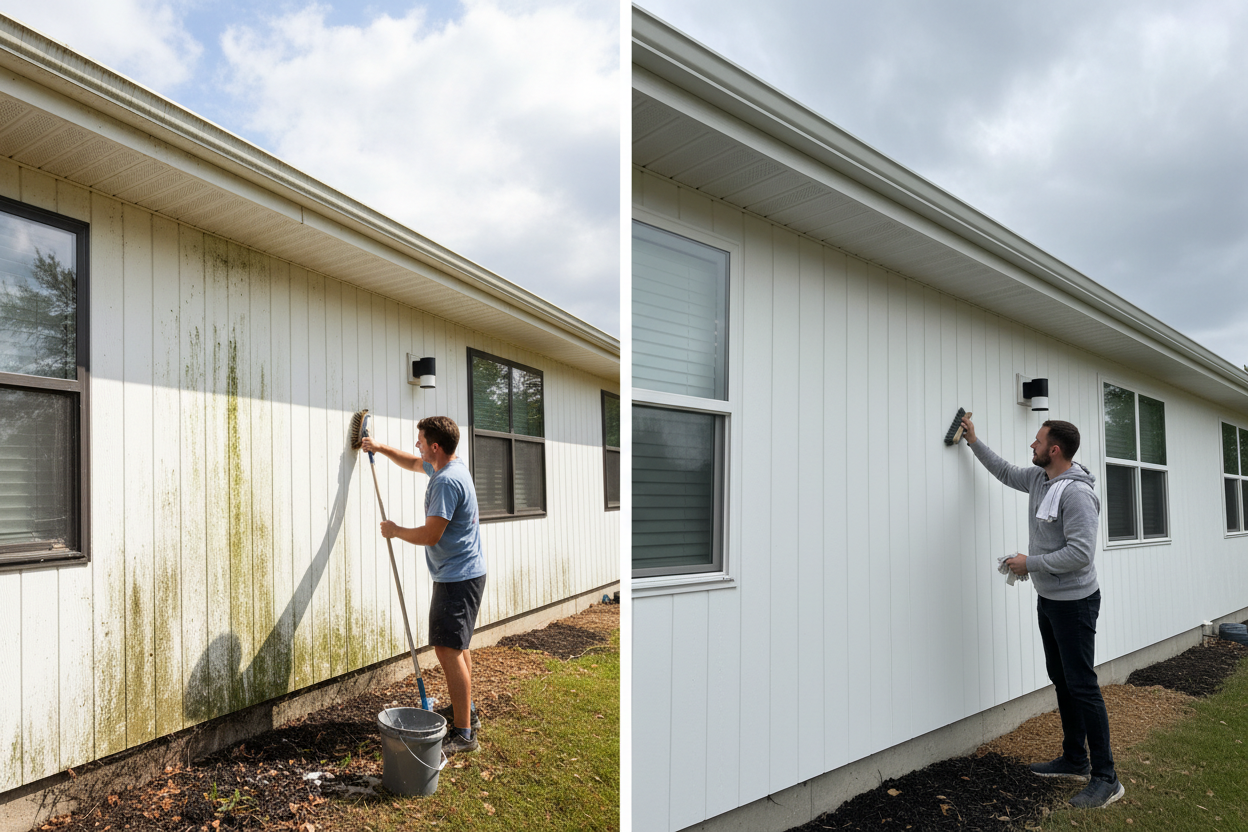
The most significant maintenance task is regular cleaning. Depending on your climate and environment, this might mean an annual wash or cleaning every few years. Homes in dusty areas, near busy roads, or in regions with high pollen counts will need more frequent attention.
You’ll also need to perform periodic inspections to check for damage, loose panels, or areas where caulking might need refreshing. While these tasks are relatively minor, they’re essential for maintaining your siding’s protective qualities and appearance.
Essential Vinyl Siding Care Tasks
Successful vinyl siding maintenance revolves around a few key activities that don’t require professional expertise or expensive tools. Most homeowners can handle these tasks themselves with basic equipment and a little time investment.
Regular cleaning forms the foundation of vinyl siding care. Start with a simple garden hose rinse to remove loose dirt and debris. For more thorough cleaning, use a soft-bristled brush or cloth with a mild detergent solution. Work from bottom to top to prevent streaking, and rinse thoroughly with clean water.
For stubborn stains or mildew, a solution of one part white vinegar to four parts water often does the trick. Avoid harsh chemicals, abrasive cleaners, or pressure washing at high settings, as these can damage the vinyl surface or force water behind the panels.
Inspection should accompany your cleaning routine. Look for loose or damaged panels, gaps in caulking around windows and doors, and any signs of impact damage. Catching issues early prevents them from becoming costly problems later.
Cleaning Your Vinyl Siding: Best Practices and Techniques
Proper cleaning technique makes all the difference in maintaining your vinyl siding’s appearance and longevity. The frequency depends on your local conditions, but most homes benefit from annual cleaning, with spot cleaning as needed throughout the year.
Start your cleaning process on a cloudy day or when the siding is in shade. Hot surfaces can cause cleaning solutions to dry too quickly, leaving streaks or residue. Begin by removing any loose debris with a soft brush or cloth, paying special attention to areas around light fixtures, under eaves, and near ground level where dirt tends to accumulate.
Mix your cleaning solution using warm water and a mild household detergent. Avoid products containing bleach, as they can cause discoloration over time. Apply the solution using a soft cloth or non-abrasive sponge, working in manageable sections.
For areas with heavy staining or mildew, allow the cleaning solution to sit for a few minutes before scrubbing gently. Always rinse thoroughly with clean water, working from top to bottom to prevent streaking.
Common Vinyl Siding Problems and Solutions
Even with proper care, vinyl siding can develop issues over time. Understanding common problems and their solutions helps you address them promptly and effectively.
Fading is perhaps the most common concern, especially with older vinyl siding that lacks modern UV protection. While some fading is inevitable over decades, proper cleaning and avoiding harsh chemicals can minimize the process. If fading becomes severe, individual panels can often be replaced without redoing the entire exterior.
Cracking or breaking typically results from impact damage or extreme temperature fluctuations. Small cracks can sometimes be repaired with vinyl siding repair kits, but larger damage usually requires panel replacement. The good news is that vinyl siding panels are designed for individual replacement when needed.
Warping or buckling often indicates installation issues or thermal expansion problems. This usually requires professional attention to identify the root cause and implement proper repairs.
Staining from rust, plant matter, or other sources can usually be addressed with appropriate cleaning techniques. Persistent stains might require specialized cleaning products designed for vinyl surfaces.
Seasonal Maintenance Tips
Adapting your vinyl siding care to seasonal conditions helps maintain optimal performance year-round. Each season presents unique challenges and opportunities for maintenance.
Spring offers an ideal time for comprehensive cleaning and inspection after winter weather. Check for any damage from ice, snow, or storms, and address issues before they worsen. This is also a good time to trim vegetation that might be touching or growing too close to your siding.
Summer maintenance focuses on dealing with increased UV exposure and potential storm damage. Regular rinsing can help remove pollen, dust, and other debris that accumulates during active months. Monitor for any signs of heat-related warping, especially on south-facing walls.
Fall preparation involves cleaning gutters and downspouts to prevent water damage, removing leaves and debris that might trap moisture against the siding, and ensuring proper drainage around your home’s foundation.
Winter care is mostly about monitoring for ice dam formation and ensuring snow doesn’t pile up against lower siding panels. Avoid using ice melt products near vinyl siding, as some chemicals can cause discoloration.
Professional vs. DIY Maintenance
Most vinyl siding maintenance falls well within the DIY category, but knowing when to call professionals can save you time and prevent damage. Regular cleaning, basic inspections, and minor repairs are typically homeowner-friendly tasks that require only basic tools and materials.
Consider professional help for extensive cleaning of multi-story homes, especially if you’re uncomfortable working on ladders. Professional cleaning services have specialized equipment and experience that can achieve better results while maintaining safety.
Repair work involving multiple panels, structural issues, or problems with the underlying house wrap or insulation should generally be left to experienced contractors. These professionals can ensure repairs are done correctly and won’t compromise your home’s weather protection.
When selecting professionals, look for contractors with specific vinyl siding experience and proper licensing and insurance. Get multiple quotes and ask for references from recent customers.
Long-Term Care and Replacement Considerations
Quality vinyl siding can last 30 to 50 years with proper care, making it a long-term investment in your home’s protection and appearance. Understanding the factors that influence longevity helps you maximize your investment.
Climate plays a significant role in vinyl siding lifespan. Extreme temperature fluctuations, high UV exposure, and frequent severe weather can accelerate wear. However, modern vinyl formulations are designed to handle these challenges better than ever before.
Installation quality significantly impacts long-term performance. Properly installed vinyl siding with adequate expansion gaps and secure fastening will outlast poorly installed materials regardless of quality differences.
As your siding ages, monitor for signs that replacement might be necessary. These include widespread fading, multiple cracked or damaged panels, frequent maintenance issues, or energy efficiency concerns. Sometimes selective replacement of problem areas can extend the life of the overall installation.
Frequently Asked Questions
How often should I clean my vinyl siding?
Most homes benefit from annual cleaning, though this can vary based on environmental factors. Homes in dusty areas, near busy roads, or with significant tree coverage might need cleaning twice per year. Regular inspection during seasonal maintenance can help you determine the right frequency for your specific situation.
Can I use a pressure washer on vinyl siding?
Yes, but with caution. Use low pressure settings (under 1,500 PSI) and keep the nozzle at least 12 inches from the surface. Never aim upward under panel edges, as this can force water behind the siding. Many homeowners find that a garden hose with a spray attachment provides sufficient cleaning power with less risk of damage.
What should I do if a panel gets damaged?
Individual vinyl siding panels can often be replaced without affecting surrounding panels. For small cracks, vinyl repair kits are available at most home improvement stores. Larger damage typically requires professional assessment to determine if panel replacement is necessary and to ensure proper installation.
Is vinyl siding really maintenance-free?
No, vinyl siding is low-maintenance rather than maintenance-free. While it requires significantly less upkeep than wood or other materials, regular cleaning and periodic inspection are necessary to maintain its appearance and protective qualities. The good news is that these tasks are relatively simple and infrequent.
How do I remove stubborn stains from vinyl siding?
Start with a mixture of warm water and mild detergent. For tougher stains, try a solution of one part white vinegar to four parts water. Avoid bleach-based cleaners, which can cause discoloration. For persistent stains, specialized vinyl siding cleaners are available at home improvement stores.
When should I consider replacing my vinyl siding?
Consider replacement when you notice widespread fading, multiple damaged panels, frequent maintenance issues, or if the siding is affecting your home’s energy efficiency. Quality vinyl siding typically lasts 30-50 years, so replacement needs often coincide with other major home improvements.
Conclusion: Embracing Low-Maintenance Living
The truth about vinyl siding maintenance lies somewhere between the “completely maintenance-free” marketing claims and the intensive upkeep required by other materials. Yes, vinyl siding requires some attention, but this maintenance is both manageable and infrequent compared to alternatives like wood or fiber cement.
With annual cleaning, periodic inspections, and prompt attention to minor issues, your vinyl siding can provide decades of reliable protection while maintaining its appearance. The key is understanding that “low-maintenance” doesn’t mean “no-maintenance,” but rather that the required care is straightforward and doesn’t demand specialized skills or expensive tools.
By following the guidelines outlined in this post, you can enjoy the benefits of vinyl siding while ensuring it continues to protect and beautify your home for years to come. Remember, a little preventive care goes a long way toward maintaining your investment and avoiding costly repairs down the road.
Whether you’re considering vinyl siding for a new home or looking to better care for your existing installation, understanding these maintenance realities helps you make informed decisions and set appropriate expectations. With proper care, vinyl siding truly can provide the low-maintenance lifestyle that drew you to it in the first place.





















Affordable home window replacement Valley View Texas














Home window replacement North Richland Hills Texas












Hutchins TX Replacement Siding Installation Services












Highland Park TX Estimate For Siding Replacement



Blue Ridge TX Cost Of Vinyl Siding Replacement








Balch Springs TX Replacement Windows And Siding