
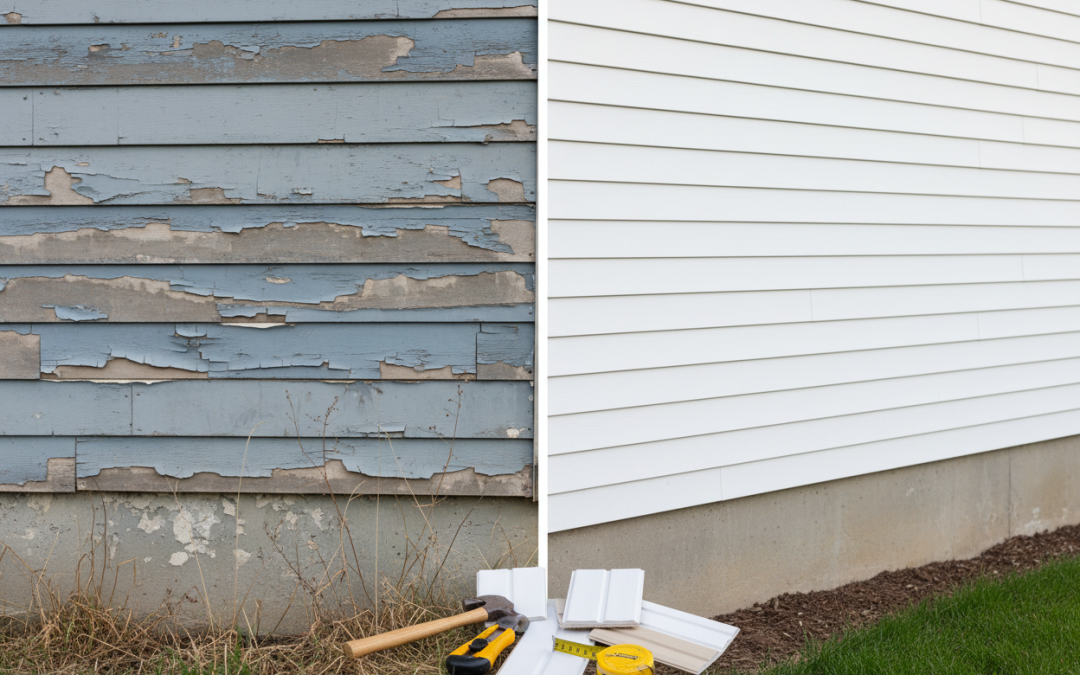
Vinyl Siding Repair vs Replacement: Making the Right Choice for Your Home
Standing in your driveway, coffee in hand, you notice that piece of vinyl siding that’s been bothering you for months. Maybe it’s cracked, faded, or hanging loose after last winter’s storm. The question that’s probably running through your mind is the same one countless homeowners face: should I repair this siding or bite the bullet and replace it entirely?
This decision isn’t just about aesthetics – it’s about protecting your investment, maintaining your home’s value, and making smart financial choices. With vinyl siding covering nearly 30% of American homes, understanding when to repair versus replace has become crucial knowledge for homeowners everywhere.
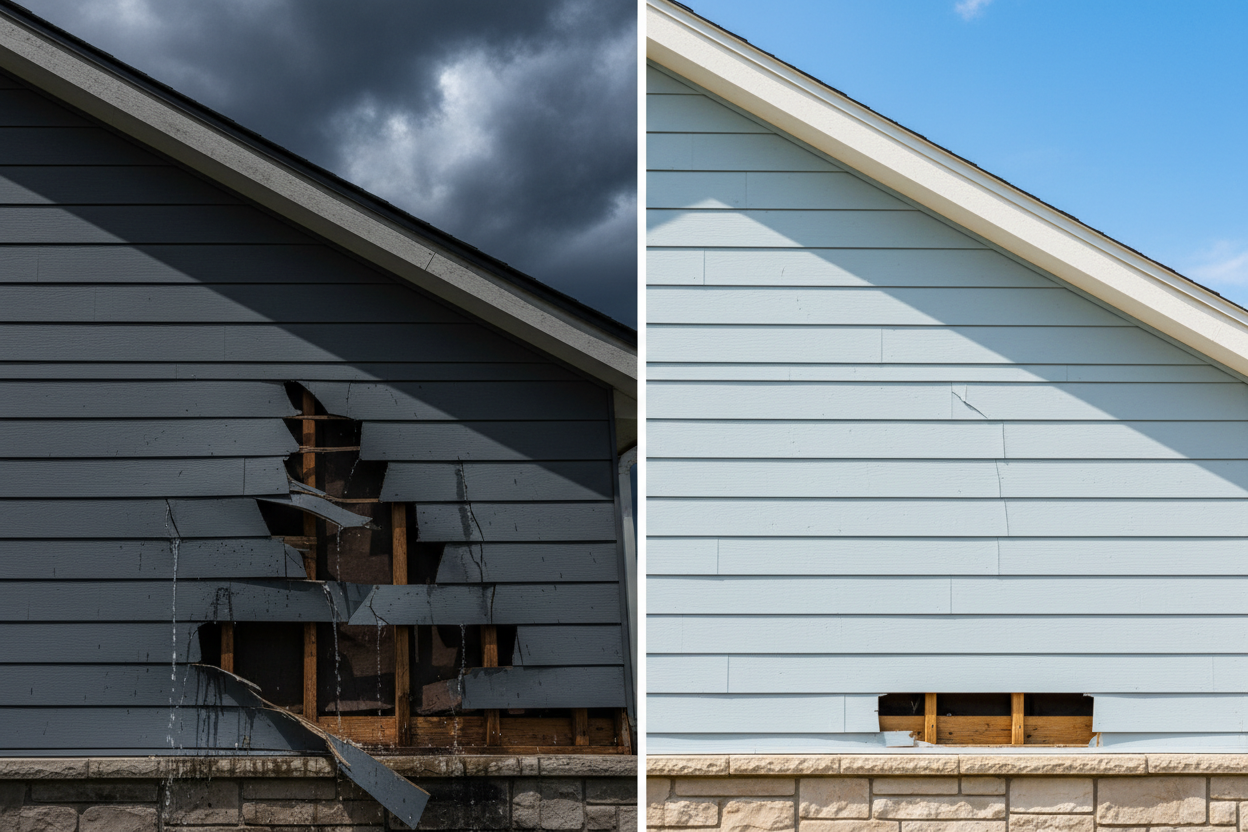
Let’s dive into everything you need to know to make the right choice for your specific situation, your budget, and your home’s future.
Understanding Vinyl Siding Damage: What You’re Really Looking At
Before we can make any decisions, we need to understand what we’re dealing with. Vinyl siding damage isn’t always created equal, and recognizing the difference between surface-level issues and structural problems can save you thousands of dollars.
Minor damage typically includes small cracks, loose panels, or isolated areas of fading. These issues usually result from normal wear and tear, minor impacts, or seasonal expansion and contraction. Think of that time your neighbor’s basketball accidentally hit your house, or when the ladder slipped while you were cleaning gutters.
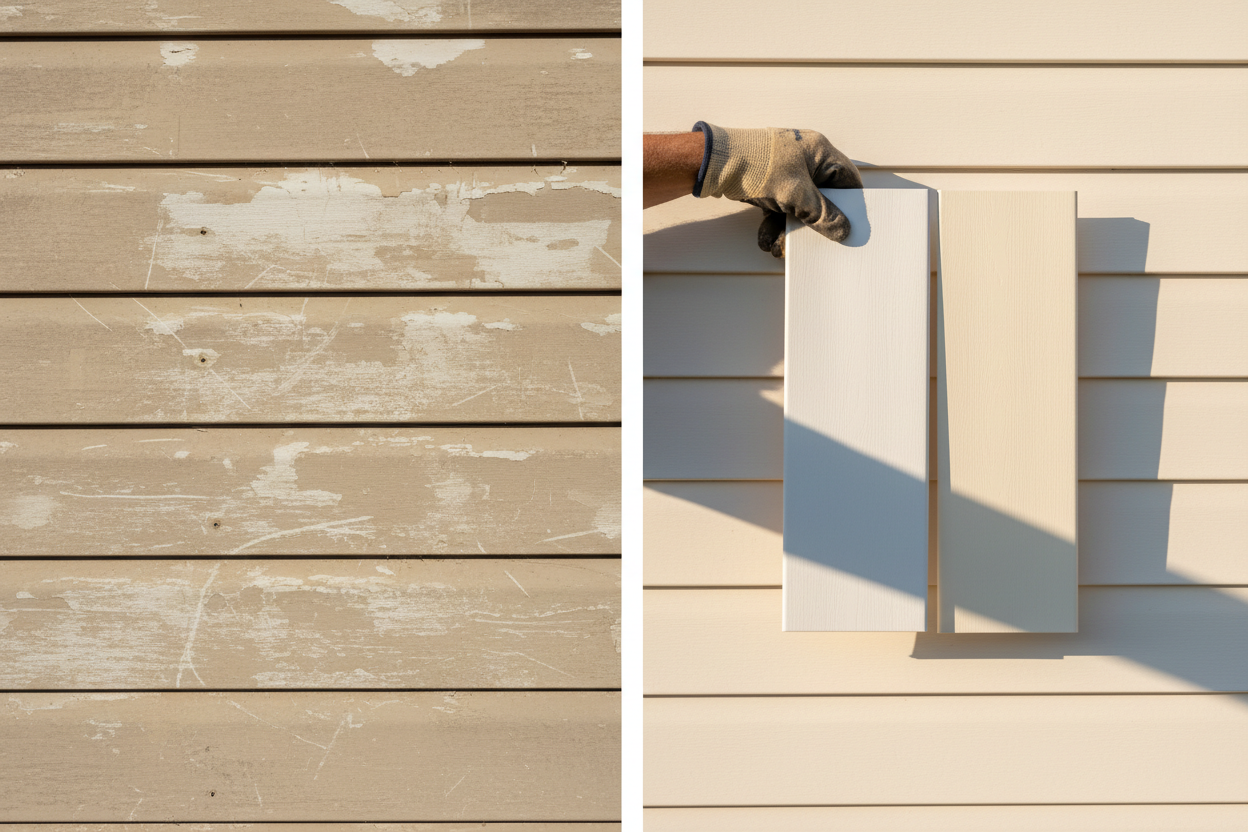
Major damage, on the other hand, tells a different story. We’re talking about extensive cracking, multiple missing panels, severe warping, or damage that exposes the underlying structure. This level of damage often indicates either significant impact, age-related deterioration, or installation problems that have compounded over time.
The key is learning to read the signs your siding is giving you. A single cracked panel near your back door? Probably a repair job. Half your south-facing wall looking like it went ten rounds with Mother Nature? That’s replacement territory.
When Vinyl Siding Repair Makes Perfect Sense
Repair work shines in specific scenarios, and recognizing these situations can save you significant money while still protecting your home effectively.
Isolated damage is the perfect candidate for repair. When you’re dealing with one or two damaged panels, a small crack, or a section that’s come loose, repair work typically costs between $100 to $500 per affected area. Compare that to full replacement costs, and the math becomes pretty clear.
Recent installation also favors repair. If your vinyl siding is less than ten years old and you’re dealing with minor issues, repairs make excellent financial sense. The material is likely still under warranty, color matching won’t be a nightmare, and the overall integrity of your siding system remains solid.
Budget constraints represent another valid reason to choose repair over replacement. Sometimes life throws curveballs – unexpected medical bills, job changes, or other home emergencies that demand immediate attention. A well-executed repair can buy you time to save for eventual replacement while keeping your home protected.
Cosmetic issues often fall into repair territory as well. Fading, minor scratches, or small dents can often be addressed through cleaning, touch-up work, or strategic panel replacement without requiring a complete overhaul.
When Full Vinyl Siding Replacement Becomes Necessary
Sometimes, despite our best intentions and budget preferences, replacement becomes the only sensible option. Recognizing these situations early can prevent small problems from becoming expensive disasters.
Age plays a significant role in this decision. Vinyl siding typically lasts 20 to 40 years, depending on quality, installation, and environmental factors. If your siding is approaching or exceeding this range, replacement often makes more sense than continued repairs, especially when you factor in energy efficiency improvements and modern material advances.
Widespread damage changes the entire equation. When more than 30% of your siding shows significant wear, damage, or deterioration, repair costs start approaching replacement costs. At this point, you’re essentially paying repair prices for a patchwork solution when you could invest in a complete, long-term fix.
Moisture infiltration represents a serious red flag that usually demands replacement. If you’re finding water damage, mold, or rot behind your siding, the problem extends beyond the vinyl itself. This situation requires addressing both the siding and potentially the underlying structure, making comprehensive replacement the safer choice.
Energy efficiency concerns also push toward replacement. Older vinyl siding often lacks modern insulation backing and proper installation techniques that significantly improve your home’s energy performance. If you’re dealing with high energy bills and aging siding, replacement can provide long-term savings that justify the initial investment.
Cost Analysis: Breaking Down the Real Numbers
Let’s talk dollars and cents, because ultimately, most homeowners need to make decisions based on realistic budgets and financial impact.
Vinyl siding repair costs vary widely based on the extent of damage and local labor rates. Simple fixes like reattaching loose panels might cost $50 to $150. Replacing individual damaged panels typically runs $100 to $300 per panel, including labor. More extensive repairs involving multiple panels or structural work can reach $500 to $1,500.
Full replacement presents a different financial picture entirely. National averages for vinyl siding replacement range from $5,000 to $14,000 for typical homes, with costs varying based on home size, siding quality, regional labor rates, and project complexity. Premium vinyl options with insulation backing can push costs toward the higher end of this range.
The hidden costs deserve attention too. Replacement projects often reveal underlying issues that need addressing – damaged sheathing, inadequate insulation, or structural problems that weren’t apparent until the old siding came off. Budget an additional 10-20% for potential surprises.
However, replacement offers long-term value that repairs simply cannot match. New siding comes with warranties, improved energy efficiency, enhanced curb appeal, and decades of maintenance-free performance. When you amortize these benefits over 20-30 years, the cost per year becomes quite reasonable.
DIY vs Professional Installation: Weighing Your Options
The DIY question comes up frequently with vinyl siding projects, and the answer depends heavily on your skill level, available time, and the scope of work involved.
DIY repairs can make sense for handy homeowners dealing with minor issues. Replacing a single panel, reattaching loose siding, or addressing small cracks falls within the capabilities of most people with basic tool skills and patience. Online tutorials and manufacturer instructions have made these tasks more accessible than ever.
However, extensive repairs and full replacements typically require professional expertise. Proper installation involves understanding moisture barriers, expansion gaps, fastening techniques, and building codes that affect both performance and warranty coverage. Mistakes in these areas can lead to expensive problems down the road.
Professional installation also brings insurance coverage, warranties, and expertise that DIY work cannot match. When you’re investing thousands in new siding, the additional cost of professional installation often represents smart insurance against costly mistakes.
Consider your time investment as well. DIY siding work is time-intensive, especially for beginners. What might take professionals a few days could stretch into weeks for weekend warriors, leaving your home exposed to weather during the process.
Long-Term Considerations and Future Planning
Smart homeowners think beyond immediate needs when making repair versus replacement decisions. Several long-term factors can significantly influence the best choice for your situation.
Home sale plans affect this decision considerably. If you’re planning to sell within the next five years, extensive repairs might provide better return on investment than full replacement. Buyers typically don’t pay premium prices for new siding, but they will negotiate down for visible damage or maintenance issues.
Conversely, if you’re planning to stay in your home for the long haul, replacement often provides better value through improved energy efficiency, reduced maintenance needs, and enhanced comfort.
Technology improvements in vinyl siding continue advancing. Modern options include better insulation, improved color retention, enhanced durability, and even smart home integration features. If your current siding is more than fifteen years old, replacement gives you access to these improvements that repair simply cannot provide.
Climate considerations also play a role in long-term planning. If you live in areas with severe weather, high UV exposure, or extreme temperature swings, investing in high-quality replacement siding with appropriate ratings for your climate can provide better long-term protection than ongoing repairs to aging material.
Making Your Final Decision: A Practical Framework
With all this information in mind, how do you actually make the decision? Here’s a practical framework that has helped thousands of homeowners navigate this choice successfully.
Start with an honest assessment of your siding’s condition. Take photos, document problem areas, and consider having a professional inspection if you’re unsure about the extent of issues. This baseline assessment provides the foundation for all subsequent decisions.
Next, calculate the true cost of repairs versus replacement. Include not just immediate costs, but factor in likely future repairs, energy savings from replacement, and the value of your time dealing with ongoing maintenance issues.
Consider your timeline and priorities. If you need an immediate solution on a tight budget, repairs might be your best option. If you’re planning ahead and want a long-term solution, replacement often provides better value despite higher upfront costs.
Get multiple quotes for both repair and replacement options. This gives you real numbers to work with rather than estimates, and often reveals options you hadn’t considered. Many contractors can suggest hybrid approaches that address immediate needs while planning for future replacement.
Finally, trust your instincts about your home and your situation. You know your budget, your plans, and your tolerance for ongoing maintenance better than anyone else. Use the information you’ve gathered to make a decision that aligns with your specific circumstances.
Frequently Asked Questions
How long does vinyl siding typically last before needing replacement?
Quality vinyl siding typically lasts 20-40 years, depending on installation quality, climate conditions, and maintenance. Premium materials and professional installation tend toward the longer end of this range, while budget materials or harsh climates may require earlier replacement.
Can I match new vinyl siding to my existing siding for repairs?
Matching existing siding can be challenging, especially for older installations. UV exposure causes color fading over time, making exact matches difficult. Many homeowners opt to replace entire visible sections rather than create obvious patch jobs, or they save extra siding from the original installation for future repairs.
Will repairing vinyl siding affect my home’s resale value?
Professional repairs that restore your siding’s appearance and function typically maintain your home’s value without providing significant increases. However, visible damage or poor-quality repair work can negatively impact value. Quality repairs are essentially maintenance that preserves existing value rather than adding new value.
How do I know if damage to my vinyl siding requires immediate attention?
Any damage that exposes your home’s underlying structure to moisture requires immediate attention. This includes large cracks, missing panels, or areas where siding has pulled away from the house. Cosmetic damage like minor scratches or small cracks can typically wait for convenient scheduling, but structural exposure should be addressed quickly to prevent water damage.
Is it worth upgrading to insulated vinyl siding during replacement?
Insulated vinyl siding typically costs 20-50% more than standard vinyl but provides improved energy efficiency, noise reduction, and impact resistance. In most climates, the energy savings help offset the additional cost over time, making it a worthwhile upgrade for homeowners planning long-term residence. The decision depends on your local energy costs, climate, and budget priorities.



















How much does it cost for vinyl replacement windows Valley View Texas








How much does it cost for vinyl replacement windows Quinlan Texas




How much does it cost for vinyl replacement windows Lancaster Texas

How much does it cost for vinyl replacement windows Lewisville Texas









Affordable home window replacement Denison Texas












Whitewright TX Replacement Siding Installation Services





Lakewood Dallas TX Replacement Windows And Siding




Highland Park TX Windows And Siding Replacement