

Siding Replacement and Neighborhood HOA Requirements: Your Complete Guide
Planning a siding replacement project? If you live in a community with a Homeowners Association (HOA), you’re probably wondering what hoops you’ll need to jump through before starting your project. Trust me, I’ve been there – standing in my driveway, looking at my weathered vinyl siding, dreaming of beautiful new fiber cement panels, only to remember that stack of HOA documents sitting in my filing cabinet.
The relationship between homeowners and HOAs can feel complicated, especially when it comes to exterior renovations like siding replacement. But here’s the thing: understanding your HOA’s requirements upfront can save you thousands of dollars, months of delays, and countless headaches down the road.
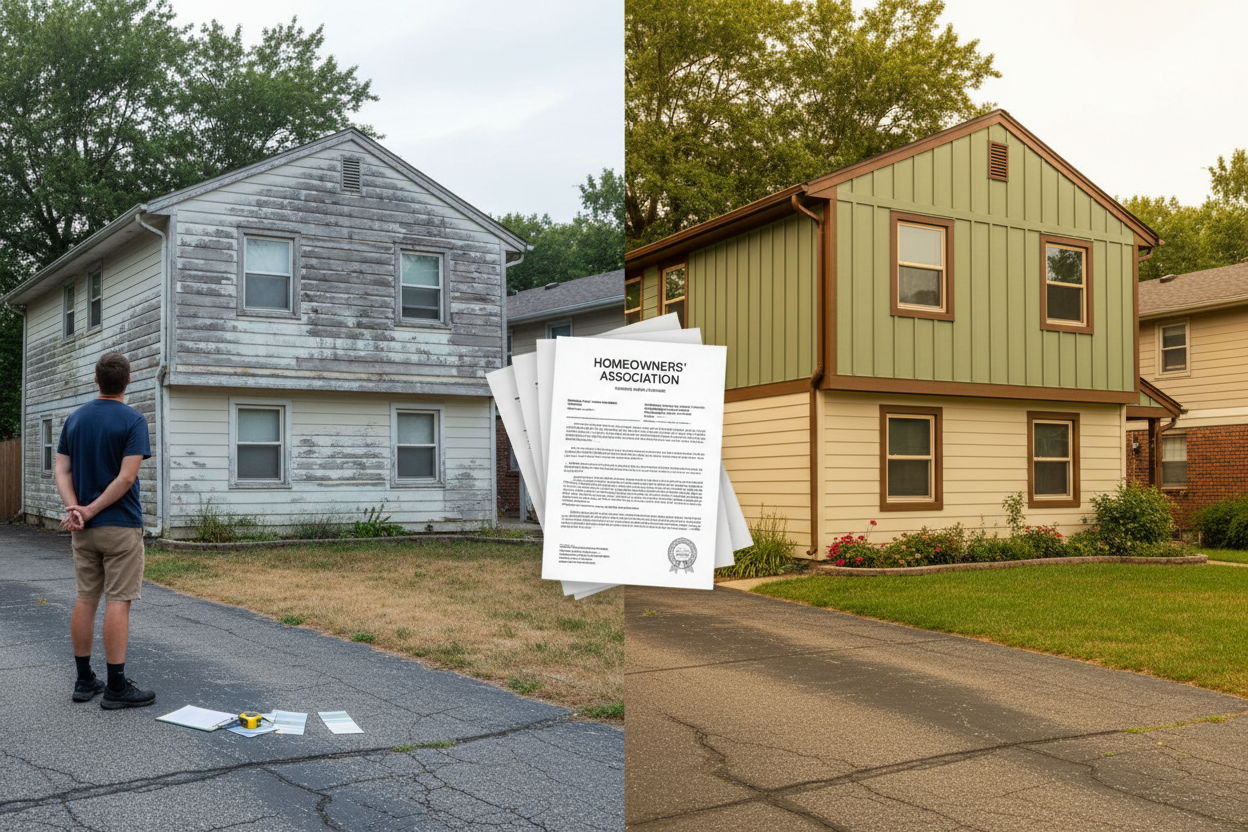
Understanding Your HOA’s Authority Over Exterior Modifications
Your HOA isn’t just being difficult when they require approval for siding replacement – they’re actually protecting property values and maintaining community standards. Most HOAs have what’s called an Architectural Review Committee (ARC) or Design Review Board (DRB) that oversees exterior changes to homes within the community.
These committees typically have authority over any visible exterior modifications, including siding materials, colors, textures, and installation methods. The scope of their power is usually outlined in your community’s Covenants, Conditions, and Restrictions (CC&Rs), which you agreed to when you purchased your home.

Before you start shopping for contractors or materials, take some time to review these documents. I know they’re not exactly light reading, but understanding what you’re working with will make the entire process smoother. Look for sections about “architectural guidelines,” “exterior modifications,” or “design standards.”
Common HOA Siding Requirements and Restrictions
While every HOA is different, there are some common themes when it comes to siding replacement requirements. Most communities focus on maintaining a cohesive aesthetic that preserves property values and community appeal.
Material restrictions are probably the most common limitation you’ll encounter. Some HOAs only allow certain types of siding – for instance, they might prohibit vinyl siding in favor of fiber cement, wood, or stone. Others might have specific brand requirements or quality standards that materials must meet.
Color palettes are another big consideration. Many HOAs maintain approved color schemes that complement the overall neighborhood design. You might find yourself choosing from a pre-selected palette rather than having complete freedom to pick any color you love. Some communities even require that your siding color coordinate with your roof, trim, or landscaping.
Texture and style requirements can also come into play. Your HOA might specify that all siding must have a certain texture (like wood grain) or prohibit certain styles (like board and batten in a community designed for traditional lap siding).
The HOA Approval Process for Siding Projects
Getting HOA approval for your siding replacement typically involves submitting a formal application to your architectural review committee. This isn’t usually as intimidating as it sounds, but it does require some preparation and patience.
Most HOAs require you to submit detailed plans that include material specifications, color samples, installation timelines, and contractor information. Some communities also want to see photos of your current siding and renderings or examples of what the finished project will look like.
The timeline for approval varies widely between communities. I’ve seen HOAs that can turn around approvals in just a few days, while others take several weeks or even months. Plan accordingly – you don’t want to schedule your contractor only to find out you’re still waiting for approval.
During the review process, the committee might request modifications to your plans. Maybe they love your material choice but want you to consider a different color, or perhaps they’re concerned about how your new siding will look next to your neighbor’s recently completed renovation. Stay flexible and remember that their goal is maintaining community standards, not making your life difficult.
Navigating Material and Color Restrictions
When your HOA has specific material or color restrictions, it’s easy to feel frustrated about limited choices. But here’s a perspective shift that might help: these restrictions often push homeowners toward higher-quality materials and timeless color choices that actually benefit long-term property values.
If you’re set on a particular material that isn’t currently approved, consider presenting a case to your HOA board. Gather information about the material’s durability, maintenance requirements, and aesthetic benefits. Sometimes boards are willing to update their guidelines when presented with compelling evidence about newer, better materials.
For color restrictions, work within the approved palette but look for ways to make your home unique through complementary elements like trim colors, landscaping, or architectural details. Many homeowners find that working within constraints actually leads to more thoughtful, cohesive design choices.
Working with Contractors in HOA Communities
Choosing the right contractor becomes even more important when you’re dealing with HOA requirements. You want someone who understands the approval process and has experience working in managed communities.
Ask potential contractors about their experience with HOA projects. Have they worked in your specific community before? Do they understand the approval process and timeline? A contractor who’s familiar with HOA requirements can often help you navigate the process more smoothly and avoid common pitfalls.
Some contractors will even help you prepare your HOA application, providing material specifications, color samples, and installation timelines in the format your review committee prefers. This service can be invaluable, especially if you’re dealing with a particularly detailed or strict HOA.
Make sure your contractor understands any specific installation requirements your HOA might have. Some communities have rules about work hours, parking, debris removal, or noise levels that could affect your project timeline or cost.
Timeline Considerations and Planning Ahead
HOA approval processes can add significant time to your siding replacement project, so planning ahead is crucial. Start the approval process well before you need the work completed, especially if you’re trying to finish before winter weather arrives.
Consider seasonal factors in your planning. Many HOAs receive more applications during spring and summer months, which can slow down the review process. If possible, submit your application during slower periods for faster turnaround times.
Build buffer time into your project schedule. Even with the most efficient HOA, unexpected delays can happen. Maybe the committee needs additional information, or perhaps they request modifications to your plans. Having extra time built into your schedule prevents these normal parts of the process from becoming major stress points.
What Happens If You Skip HOA Approval
I’ve heard homeowners say they’ll just replace their siding and ask for forgiveness later, but this approach rarely works out well. Most HOAs have enforcement mechanisms that can make your life quite difficult if you proceed without approval.
Potential consequences include fines that accumulate daily until you bring your project into compliance, legal action to force you to undo completed work, or liens against your property that can complicate future sales or refinancing.
Even if your HOA doesn’t immediately notice your unauthorized siding replacement, the issue will likely surface eventually – perhaps when you try to sell your home or when a neighbor files a complaint. At that point, you might be forced to remove perfectly good new siding and start over with approved materials, which obviously costs much more than getting approval upfront.
Tips for a Smooth HOA Approval Process
After helping several friends navigate their own HOA siding approvals, I’ve learned that a few simple strategies can make the whole process much smoother. First, communicate early and often with your architectural review committee. Don’t wait until you have every detail figured out – reach out early to understand their specific requirements and preferences.
Attend HOA meetings when possible, especially if siding or exterior renovations are on the agenda. This gives you insight into how the board thinks about these projects and what they prioritize in their decision-making.
Consider your neighbors’ perspectives when planning your project. If your new siding will be dramatically different from surrounding homes, be prepared to explain how it fits with the community’s overall aesthetic. Sometimes a conversation with immediate neighbors before submitting your application can help you anticipate and address concerns.
Keep detailed records throughout the process. Save all correspondence with your HOA, keep copies of submitted materials, and document any verbal conversations with committee members. This documentation protects you if questions arise later and helps ensure everyone stays on the same page.
Conclusion
Replacing your siding in an HOA community doesn’t have to be a nightmare, but it does require careful planning and patience. The key is understanding your community’s specific requirements early in the process and working collaboratively with your architectural review committee rather than against them.
Remember that HOA guidelines exist to protect everyone’s property values, including yours. While the approval process might seem like an extra hurdle, it helps ensure that your investment in new siding contributes positively to your community’s overall appeal and market value.
Take the time to understand your HOA’s requirements, choose experienced contractors, and plan for a longer timeline than you might need for a non-HOA project. With the right approach, you’ll end up with beautiful new siding that you love and that enhances your entire neighborhood.
Frequently Asked Questions
How long does HOA approval typically take for siding replacement?
Most HOAs take between 2-6 weeks to review and approve siding replacement applications, though this varies significantly by community. Some efficient HOAs can approve straightforward projects in just a few days, while others with monthly meeting schedules might take 6-8 weeks. Check your HOA’s specific timeline requirements in your governing documents.
Can my HOA reject my siding replacement application?
Yes, HOAs can reject applications that don’t meet their architectural guidelines or community standards. However, they typically must provide specific reasons for rejection and often allow you to resubmit with modifications. Most rejections stem from unapproved materials, colors, or installation methods rather than blanket opposition to siding replacement.
What happens if I start my siding project without HOA approval?
Starting without approval can result in daily fines, legal action, or requirements to remove completed work. Most HOAs have enforcement powers outlined in their CC&Rs, including the ability to place liens on your property. It’s always better to get approval first, even if it delays your project.
Do I need HOA approval if I’m replacing siding with the exact same material and color?
Most HOAs require approval for any exterior modifications, even if you’re using identical materials. However, some communities have expedited approval processes for like-for-like replacements. Check your specific HOA guidelines or contact your architectural review committee to confirm requirements.
Can I appeal an HOA decision if my siding application is rejected?
Most HOAs have appeal processes outlined in their governing documents. This typically involves presenting your case to the full board or a separate appeals committee. You’ll usually need to provide additional information addressing the committee’s specific concerns or propose modifications to your original plan.
What documents do I need to submit for HOA siding approval?
Common requirements include detailed material specifications, color samples, contractor information, project timeline, site plans showing your home’s location, and sometimes photos of current siding or renderings of the proposed changes. Your HOA should provide a specific application checklist outlining their exact requirements.















Affordable home window replacement Southlake Texas


How much does it cost for vinyl replacement windows Palmer Texas





Home replacement window companies Rockwall Texas


Home window replacement near me Preston Hollow Dallas Texas












Home window replacement cost North Richland Hills Texas






How much does it cost for vinyl replacement windows Duncanville Texas


Home replacement window companies Rose Hill Texas

Little Elm TX Cost Of Vinyl Siding Replacement









Keller TX Replacement Siding Installation Services


Fort Worth TX Replacement Siding Installation Services









Plano TX Replacement Siding Installation Services