
Siding Replacement and Electrical Work: Coordination Tips for a Seamless Home Renovation
When you’re planning a major home renovation that involves both siding replacement and electrical work, coordination becomes absolutely crucial. I’ve seen countless homeowners struggle with timing issues, unexpected complications, and budget overruns simply because they didn’t properly coordinate these two interconnected projects. The truth is, your home’s exterior siding and electrical systems are more connected than you might think, and tackling both simultaneously requires careful planning and strategic execution.
Whether you’re upgrading your home’s curb appeal with new siding or addressing electrical safety concerns, understanding how these projects intersect will save you time, money, and frustration. In this comprehensive guide, I’ll walk you through everything you need to know about coordinating siding replacement with electrical work, from initial planning stages to final inspections.
Understanding the Connection Between Siding and Electrical Systems
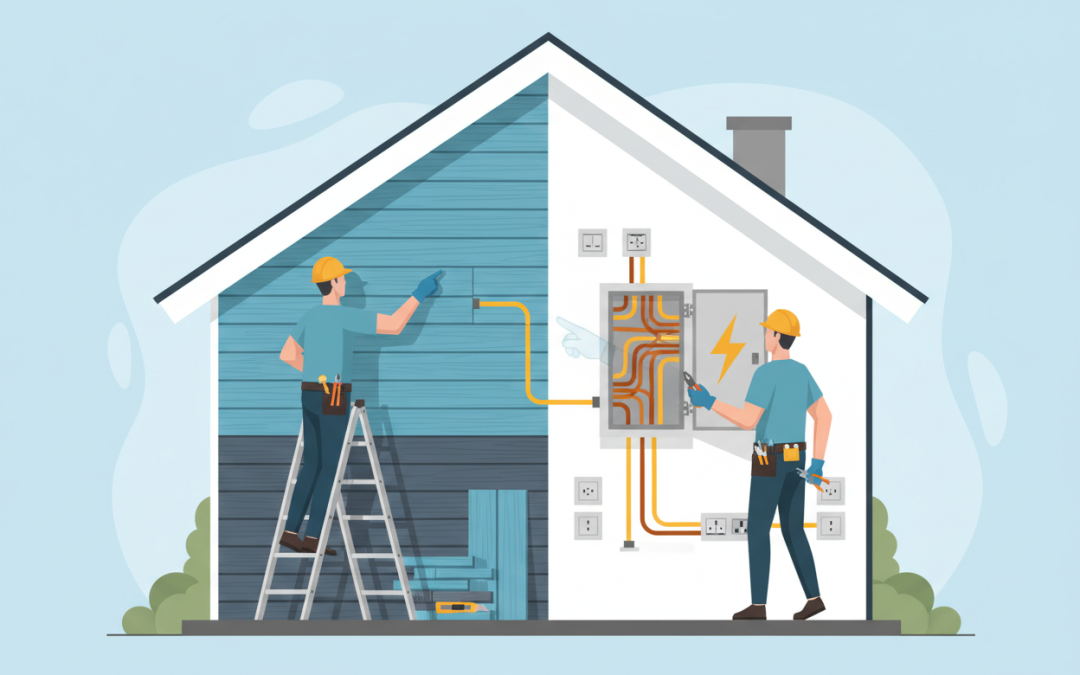
Your home’s siding doesn’t just provide aesthetic appeal and weather protection – it also houses crucial electrical components. Exterior outlets, lighting fixtures, security systems, and electrical meters all depend on proper integration with your siding. When you replace siding without considering these electrical elements, you’re setting yourself up for problems down the road.
The electrical service panel, outdoor receptacles, and various conduits often run behind or through your existing siding. During a siding replacement project, these components need to be temporarily disconnected, relocated, or upgraded to meet current electrical codes. This is where coordination becomes essential – you can’t simply remove old siding without addressing the electrical components first.
Modern building codes also require specific clearances around electrical equipment, proper grounding systems, and updated GFCI protection for outdoor outlets. If your electrical system hasn’t been updated in years, a siding replacement project presents the perfect opportunity to bring everything up to current standards.
Planning Phase: Setting Yourself Up for Success
The planning phase is where successful coordination begins. Start by conducting a thorough assessment of both your siding needs and electrical requirements. Walk around your home’s exterior and document every electrical component that might be affected by the siding replacement. This includes outdoor outlets, light fixtures, doorbell systems, security cameras, and any conduits or junction boxes.
Next, consider whether you want to add new electrical features during the renovation. Many homeowners use siding replacement as an opportunity to install additional outdoor outlets, upgrade lighting systems, or add electric vehicle charging stations. Planning these additions now is much more cost-effective than retrofitting them later.
Create a detailed timeline that accounts for both projects. Electrical work often needs to be completed in phases – some before siding removal, some during installation, and final connections after the new siding is in place. Understanding this sequence will help you coordinate contractors and avoid delays.
Choosing the Right Contractors for Coordinated Work
Selecting contractors who understand the interconnected nature of siding and electrical work is crucial for project success. Look for siding contractors who have experience working alongside electricians and understand the electrical implications of their work. Similarly, choose electricians who are familiar with exterior renovation projects and the unique challenges they present.
Some contractors specialize in coordinated renovations and can handle both aspects of the project. While this might seem convenient, make sure they’re properly licensed for both types of work. In many areas, electrical work requires specific licensing and permits that general contractors might not possess.
Communication between contractors is vital. Establish clear expectations about coordination from the beginning. Your siding contractor should know exactly when electrical components need to be disconnected and when they’ll be reconnected. Your electrician should understand the siding installation timeline and be available for the various phases of electrical work.
Timing and Sequencing: The Critical Path to Success
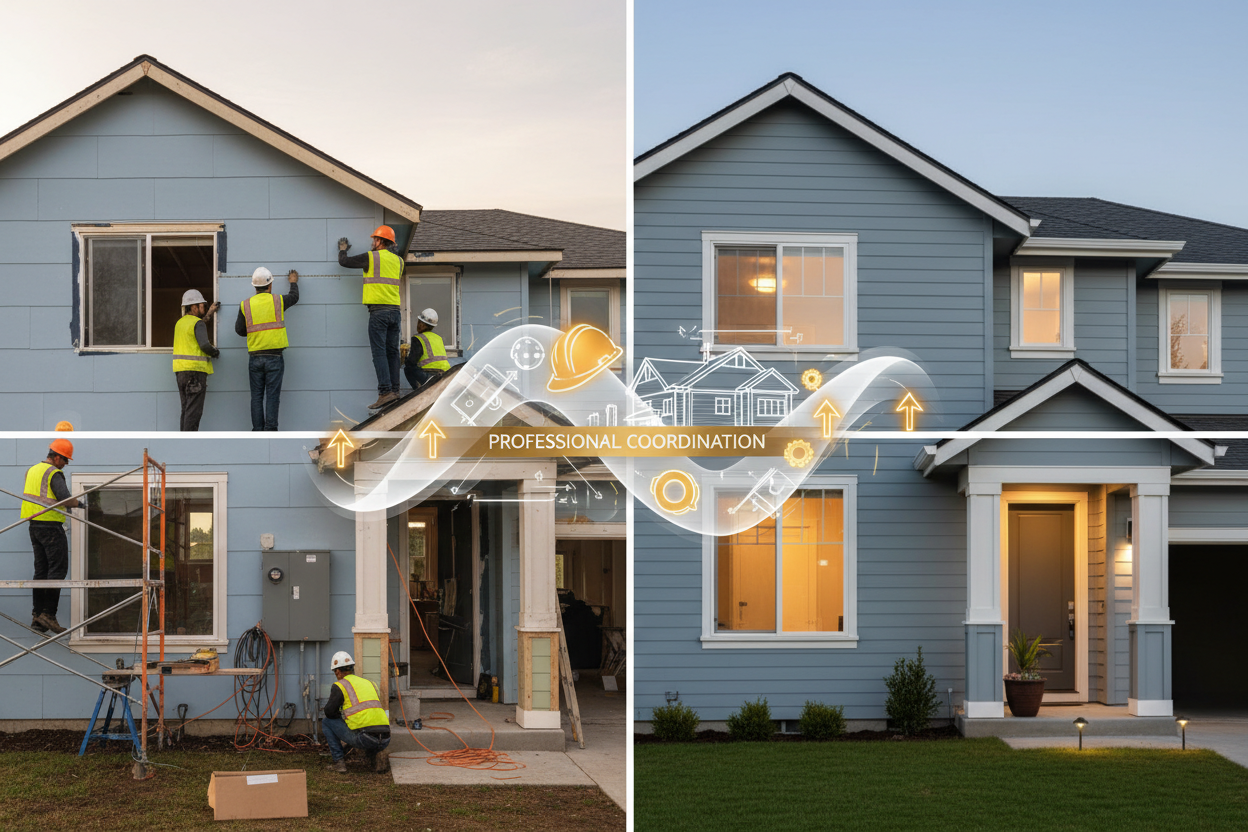
Proper sequencing of siding and electrical work can make or break your project. Generally, the process follows this order: initial electrical assessment and planning, temporary disconnection of electrical components, siding removal, rough electrical work for new installations, siding installation with electrical rough-ins, and final electrical connections and testing.
The initial electrical assessment should happen before any siding work begins. Your electrician needs to evaluate the existing system, identify components that need upgrading, and plan for any new installations. This assessment will also reveal whether your electrical panel needs upgrading to handle additional circuits.
Before siding removal begins, all electrical components must be safely disconnected. This isn’t a job for your siding contractor – it requires a licensed electrician who can ensure proper disconnection and protection of electrical systems. Attempting to work around live electrical components during siding removal is dangerous and potentially deadly.
During siding installation, your electrician should be available to install new rough-ins, update wiring routes, and ensure proper clearances around electrical equipment. The siding contractor needs to coordinate with the electrician to create appropriate openings and mounting surfaces for electrical components.
Safety Considerations and Code Compliance
Safety should be your top priority when coordinating siding replacement with electrical work. Electrical hazards during exterior renovation can be severe, including electrocution, fires, and property damage. Never attempt to work around electrical components without proper training and equipment.
Current electrical codes require specific safety features for outdoor installations. GFCI protection is mandatory for most exterior outlets, and proper grounding systems are essential for safety. If your existing electrical system doesn’t meet current codes, this is the time to upgrade.
Weather protection is another critical safety consideration. Exposed electrical components during siding replacement are vulnerable to moisture damage. Your contractors should have plans for protecting electrical systems during the renovation, especially if weather delays occur.
Permit requirements vary by location, but most areas require permits for both significant siding replacement and electrical work. Make sure all necessary permits are obtained before work begins. Failing to get proper permits can result in fines, insurance issues, and problems when selling your home.
Budget Considerations and Cost Management
Coordinating siding replacement with electrical work can actually save money compared to tackling these projects separately. Shared mobilization costs, coordinated material deliveries, and reduced disruption to your daily life all contribute to overall savings. However, proper budgeting requires understanding the full scope of both projects.
Electrical upgrades often reveal additional needs once work begins. Old wiring might need replacement, electrical panels might require upgrading, or code compliance issues might surface. Build contingency funds into your budget to handle these discoveries without derailing your project.
Consider the long-term value of coordinated improvements. While the upfront cost might be higher than addressing just one system, the combined impact on your home’s value, energy efficiency, and functionality often justifies the investment.
Get detailed written estimates from all contractors involved. Make sure these estimates account for coordination requirements, temporary electrical services if needed, and any code compliance upgrades. Verbal estimates and handshake agreements often lead to disputes and cost overruns.
Common Challenges and How to Overcome Them
Weather delays are perhaps the most common challenge in coordinated exterior renovations. Rain, snow, or extreme temperatures can halt work and disrupt carefully planned sequences. Build flexibility into your timeline and have contingency plans for weather protection of exposed electrical systems.
Discovery of unexpected issues is another frequent challenge. Hidden electrical problems, structural issues behind siding, or code compliance requirements that weren’t apparent during initial planning can throw off schedules and budgets. The key is maintaining open communication between all parties and addressing issues promptly.
Contractor coordination problems can derail even well-planned projects. Miscommunication about schedules, scope of work, or responsibilities often leads to delays and finger-pointing. Establish clear communication protocols from the beginning and consider hiring a project manager for complex renovations.
Material delivery coordination becomes crucial when multiple trades are working simultaneously. Siding materials, electrical components, and tools all need to arrive at the right time and be stored safely. Poor material management can lead to delays, damage, and safety hazards.
Quality Control and Final Inspections
Quality control throughout the project ensures both your siding and electrical work meet professional standards. Regular inspections during each phase of work help catch problems early when they’re easier and less expensive to fix.
Electrical inspections are typically required at multiple stages: after rough-in work, before siding installation covers electrical components, and after final connections are made. Don’t skip these inspections – they’re designed to ensure safety and code compliance.
Final testing of all electrical systems should be thorough. Test every outlet, switch, and fixture to ensure proper operation. Check GFCI devices to confirm they’re working correctly. Verify that all electrical components are properly integrated with the new siding and that clearance requirements are met.
Document the completed work with photos and keep all permits, inspection certificates, and warranty information. This documentation will be valuable for insurance purposes, future maintenance, and potential home sales.
Frequently Asked Questions
Q: Can I replace siding without affecting my electrical system?
A: In most cases, no. Siding replacement typically affects outdoor outlets, light fixtures, and other electrical components mounted on exterior walls. Even if you’re not upgrading your electrical system, existing components will need to be temporarily disconnected and reconnected.
Q: How much does it cost to coordinate siding replacement with electrical work?
A: Costs vary significantly based on the scope of work, but coordinating projects often saves 10-20% compared to doing them separately. Electrical work can range from $500 for simple reconnections to $5,000 or more for major upgrades.
Q: Do I need separate permits for siding and electrical work?
A: Usually, yes. Most jurisdictions require separate permits for siding replacement and electrical work. Check with your local building department for specific requirements in your area.
Q: How long does a coordinated siding and electrical project take?
A: Timeline depends on project scope and home size, but most coordinated projects take 1-3 weeks longer than siding replacement alone. Weather, permit approvals, and inspection schedules can extend timelines.
Q: Should I hire one contractor for both jobs or separate specialists?
A: This depends on the complexity of your electrical needs. For simple reconnections, a qualified siding contractor might handle coordination. For upgrades or new installations, separate licensed specialists often provide better results.
Q: What happens to my power during the renovation?
A: Most electrical work can be done without shutting off power to your entire home. However, specific circuits may need to be temporarily disconnected. Discuss power requirements with your contractor before work begins.
Coordinating siding replacement with electrical work requires careful planning, clear communication, and attention to safety. While the process might seem complex, the benefits of tackling both projects simultaneously – including cost savings, improved functionality, and enhanced home value – make the coordination effort worthwhile. By following these guidelines and working with qualified professionals, you can ensure a successful renovation that enhances both your home’s appearance and electrical safety for years to come.


Home replacement window cost Highland Park Texas



























Affordable home window replacement Southlake Texas




Home window replacement near me Grand Prairie Texas


Replacement window cost Preston Hollow Dallas Texas



How much does it cost for vinyl replacement windows Sachse Texas













Mobile City TX Vinyl Siding Replacement Near Me






Euless TX Replacement Siding Installation Services






Farmersville TX Vinyl Siding Replacement Near Me