
How Siding Replacement Affects Home Internet and Cable Wiring: What Homeowners Need to Know
When you’re planning a siding replacement project, you’re probably focused on curb appeal, energy efficiency, and protecting your home from the elements. But there’s one crucial aspect that many homeowners overlook until it’s too late: how the project will impact your internet and cable connections. Trust me, discovering your high-speed internet has been accidentally severed during construction is not the surprise you want on a Monday morning when you’re trying to work from home.
The relationship between exterior siding work and your home’s communication infrastructure is more complex than most people realize. Your internet, cable TV, phone lines, and even satellite connections all depend on wiring that runs along or through your home’s exterior walls. Understanding this connection before you start your siding project can save you significant headaches, unexpected costs, and service interruptions.
Understanding Your Home’s External Wiring Infrastructure
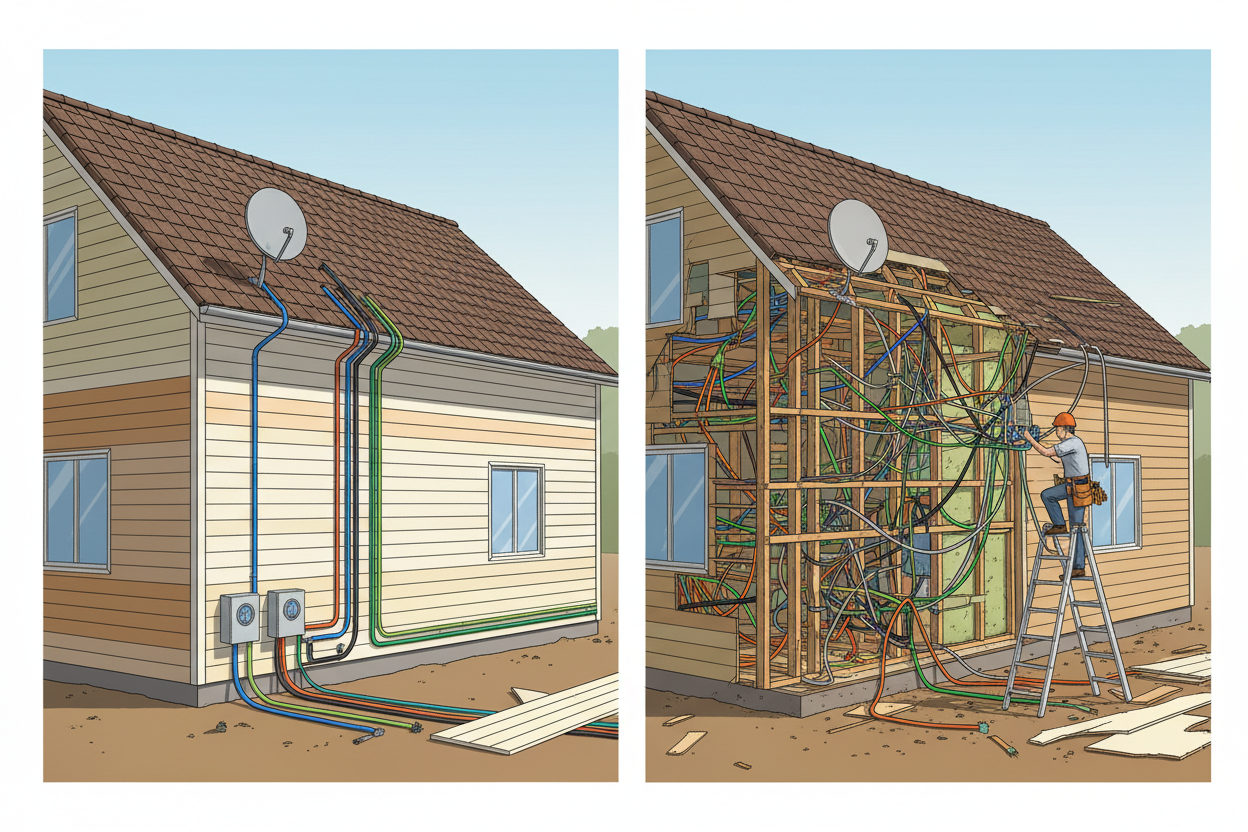
Before diving into how siding replacement affects these systems, let’s take a moment to understand what we’re working with. Most homes have multiple types of external wiring that could be impacted during a siding project.
Your internet connection likely enters your home through either a coaxial cable (for cable internet), fiber optic cable (for fiber internet), or phone line (for DSL). These cables typically run from the street to your home, often attached to or running along your exterior walls before entering through a designated entry point.
Cable television services usually share infrastructure with internet services, especially if you have a bundled package from your provider. The same coaxial cable that brings your internet often carries your TV signal as well.
Traditional landline phone service, while less common today, still exists in many homes and uses its own set of wires. Even if you don’t actively use a landline, these wires might still be present and could be connected to your internet service if you have DSL.
Satellite TV connections are particularly vulnerable during siding projects because they involve both the dish itself and the coaxial cables that run from the dish to your receiver inside the home.
Common Risks During Siding Replacement Projects
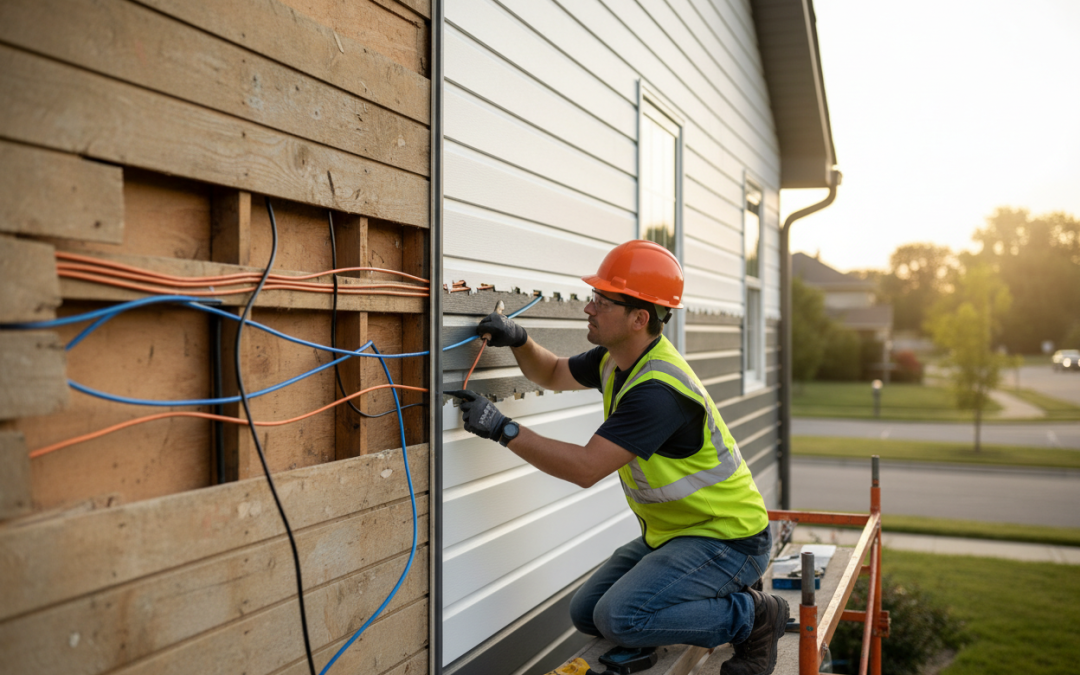
The biggest risk during any siding replacement project is accidental damage to existing wiring. I’ve seen contractors accidentally cut through cables while removing old siding, especially when wires are hidden behind deteriorated materials or have been painted over multiple times.
Another common issue occurs when old attachment points are removed. Many communication cables are secured to homes using clips, brackets, or staples that attach directly to the siding or underlying sheathing. When the old siding comes off, these attachment points often come with it, leaving cables hanging loose or creating stress points that can lead to future failures.
Weather exposure during construction presents another significant risk. Communication cables aren’t designed to be exposed to direct weather for extended periods. If your siding project takes several days or weeks, temporarily exposed connections could suffer water damage or other weather-related issues.
Sometimes the risk isn’t immediate damage but rather interference with future service calls. If cables get buried behind new siding in non-standard locations, it can make future maintenance, upgrades, or troubleshooting much more difficult and expensive.
Planning Ahead: Pre-Construction Considerations
The key to avoiding problems is planning ahead, and this starts with a thorough assessment of your current setup. Walk around your home and identify every cable, wire, or connection point related to your communication services. Take photos from multiple angles – these will be invaluable references during and after construction.
Contact your service providers well before construction begins. Most major internet and cable companies offer free service calls to assess and potentially relocate connections before construction projects. This proactive approach is much less expensive than emergency repair calls after damage has occurred.
Consider this an opportunity to upgrade or optimize your setup. If your current cable entry points are in inconvenient locations, or if you’ve been thinking about upgrading to fiber internet, a siding replacement project provides the perfect opportunity to make these changes while the walls are already being worked on.
Discuss your communication needs with your siding contractor during the planning phase. Experienced contractors have usually dealt with these issues before and can often suggest solutions or modifications to their approach that will minimize risks to your wiring.
Working with Contractors: Communication is Key
Not all siding contractors have the same level of experience with communication infrastructure, so it’s important to have detailed conversations about your specific setup. Make sure your contractor understands the importance of your internet and cable connections, especially if you work from home or rely heavily on these services.
Ask your contractor about their experience with similar projects and how they typically handle existing wiring. A contractor who immediately understands your concerns and has a clear plan for protecting existing infrastructure is probably someone you can trust with your project.
Establish clear protocols for what should happen if wiring is accidentally damaged during construction. Will the contractor take responsibility for arranging repairs? Who pays for service calls? These conversations are much easier to have before problems arise than after.
Consider requiring your contractor to take before and after photos of all communication infrastructure. This creates a clear record of the original setup and can be helpful if issues arise later.
Temporary Solutions During Construction
Depending on the scope of your siding project, you might need temporary solutions to maintain your internet and cable service during construction. Some contractors can arrange for temporary cable routing that keeps your services active while work is being completed on different sections of your home.
If temporary service interruptions are unavoidable, plan accordingly. This might mean scheduling the work during a time when you can work elsewhere, arranging for mobile hotspot service, or coordinating with family members who might need internet access for school or work.
For longer projects, consider having your service provider install a temporary connection point that can be easily moved as work progresses around your home. This approach requires more coordination but can be worth it for maintaining consistent service.
Post-Installation: Ensuring Everything Works Properly
Once your new siding is installed, don’t assume everything is working correctly just because your internet and cable seem to be functioning. Test all of your services thoroughly, including internet speed tests, cable channel reception, and any other communication services you rely on.
Pay attention to signal quality, not just basic functionality. Damaged cables might still work but provide degraded service that could worsen over time. If you notice slower internet speeds, pixelated TV reception, or intermittent service issues after your siding project, these could be signs of wiring problems that need attention.
Document the final routing and attachment points of all communication cables. This information will be valuable for future maintenance, upgrades, or if you need to call service technicians for any reason.
Long-term Maintenance and Future Considerations
Your new siding should provide better protection for your communication infrastructure, but it’s important to maintain proper clearances and avoid damage during routine maintenance. When cleaning your siding, be careful around cable attachment points and entry locations.
Consider the long-term implications of your cable routing choices. Technology continues to evolve rapidly, and what works for today’s services might not be optimal for future upgrades. Leaving some flexibility in your setup can save money and hassle down the road.
Regular visual inspections of your external communication infrastructure can help you catch potential problems before they become service interruptions. Look for loose connections, damaged cables, or attachment points that might be pulling away from your new siding.
Frequently Asked Questions
Q: How much advance notice should I give my internet and cable providers before starting a siding replacement project?
A: It’s best to contact your providers at least 2-3 weeks before construction begins. This gives them time to schedule assessment visits and make any necessary adjustments to your service connections.
Q: Will my homeowner’s insurance cover damage to communication wiring during siding replacement?
A: This varies by policy, but many homeowner’s insurance policies don’t cover damage to external communication wiring. Check with your insurance provider and consider requiring your contractor to carry appropriate liability coverage.
Q: Can I install new cable entry points during my siding replacement project?
A: Yes, this is often an ideal time to relocate or add new entry points. Coordinate with both your contractor and service providers to ensure proper installation and avoid issues with your service agreements.
Q: How long does it typically take to repair damaged communication cables?
A: Simple repairs might be completed within 24-48 hours, but more complex issues or those requiring new cable runs could take several days to a week, especially if special equipment or permits are needed.
Q: Should I upgrade my communication infrastructure during siding replacement?
A: If you’ve been considering upgrades like fiber internet or additional cable outlets, a siding replacement project provides an excellent opportunity to make these changes while the exterior walls are already being worked on.
Q: What should I do if I notice service problems after my siding project is completed?
A: Contact your service provider immediately to report the issues. Document any problems with photos and keep records of service calls. If the problems are related to construction damage, you may need to involve your contractor as well.
Planning a siding replacement project requires attention to many details, and your home’s communication infrastructure is definitely one that deserves careful consideration. By understanding the potential impacts, planning ahead, and working closely with both your contractor and service providers, you can ensure that your beautiful new siding doesn’t come at the cost of your connectivity. Remember, a little extra planning upfront can save you significant time, money, and frustration later on.





Affordable home window replacement Blue Ridge Texas


How much does it cost for vinyl replacement windows Palmer Texas














Home replacement window companies Copeville Texas







How much does it cost for vinyl replacement windows Springtown Texas











How much does it cost for vinyl replacement windows Dallas Texas









Lake Highlands Dallas TX Siding Replacement Contractors



Lake Highlands Dallas TX Replacement Of Siding






Preston Hollow Dallas TX Siding Replacement Company












Lake Highlands Dallas TX Siding Replacement Companies