The Long-Term Durability of Modern Vinyl Building Materials: A Comprehensive Guide
When I first started working in construction twenty years ago, vinyl siding was often dismissed as a cheap alternative to wood or brick. Fast forward to today, and I’ve witnessed a remarkable transformation in vinyl building materials that has completely changed my perspective. Modern vinyl products have evolved into sophisticated, durable solutions that rival traditional materials in both performance and aesthetics.
The question isn’t whether vinyl can last – it’s about understanding just how impressive its longevity has become. With advances in manufacturing technology, UV stabilizers, and impact-resistant formulations, today’s vinyl building materials are engineered to withstand decades of harsh weather conditions while maintaining their appearance and structural integrity.
Understanding Modern Vinyl Material Composition
Today’s vinyl building materials are far more complex than their predecessors from the 1970s and 1980s. Modern vinyl siding, windows, and trim are typically made from polyvinyl chloride (PVC) that’s been enhanced with multiple additives designed specifically for long-term outdoor performance.
The key components that contribute to durability include titanium dioxide for UV protection, impact modifiers for flexibility, and stabilizers that prevent degradation from heat and weathering. Premium vinyl products often incorporate capstock technology, where a protective layer is co-extruded over the base material, providing additional protection against fading and chalking.
What really impressed me during a recent project was learning that high-quality vinyl siding now contains up to 15% titanium dioxide – that’s nearly double what was used just a decade ago. This increased concentration significantly improves the material’s ability to reflect UV rays and maintain color stability over time.
Weather Resistance and Climate Performance
One of the most remarkable aspects of modern vinyl building materials is their ability to perform consistently across diverse climate conditions. Unlike wood, which can rot, warp, or split, or metal, which can rust and corrode, vinyl maintains its structural integrity through extreme temperature fluctuations.
In cold climates, quality vinyl products remain flexible down to temperatures as low as -40°F, preventing the brittleness that plagued earlier formulations. The material’s thermal expansion and contraction properties have been carefully engineered to work within standard installation tolerances, preventing buckling or gaps that could compromise the building envelope.
Hot, sunny climates present different challenges, but modern vinyl excels here too. Advanced UV stabilizers protect against the photodegradation that causes fading and surface deterioration. I’ve personally inspected vinyl siding installations in Arizona and Florida that are over 15 years old and still look remarkably fresh, with minimal color change or surface weathering.
Impact Resistance and Structural Integrity
The durability conversation around vinyl often centers on its ability to withstand physical impacts. Modern vinyl formulations have made significant strides in this area, with many products now meeting or exceeding impact resistance standards that were once exclusive to premium materials.
Contemporary vinyl siding can typically withstand hail impacts up to 1.25 inches in diameter without cracking or permanent deformation. This level of performance is achieved through carefully balanced polymer blends that provide the right combination of rigidity and flexibility.
I remember working on a project in Texas where the homeowner was initially skeptical about vinyl’s durability after experiencing severe hail damage to their previous wood siding. Three years later, after multiple severe weather events, their new vinyl siding showed no signs of damage while neighboring homes with other materials required repairs.
Color Retention and Aesthetic Longevity
Perhaps the most visible aspect of long-term durability is how well vinyl building materials maintain their appearance over time. Early vinyl products were notorious for fading, particularly darker colors that absorbed more heat and UV radiation.
Modern manufacturing has largely solved this problem through several innovations. Capstock technology creates a protective surface layer that’s specifically formulated for color stability. Additionally, improved colorant systems and UV stabilizers work together to maintain the original appearance for decades rather than years.
The industry has also expanded beyond basic white and beige options. Today’s vinyl products are available in rich, deep colors that were previously impossible to achieve with acceptable fade resistance. Dark blues, forest greens, and even black vinyl siding options now come with warranties that guarantee color retention for 20 years or more.
Maintenance Requirements and Long-Term Care
One of vinyl’s greatest durability advantages lies in its minimal maintenance requirements. Unlike wood siding that needs regular painting and sealing, or metal that requires rust prevention treatments, vinyl building materials maintain their performance with basic cleaning and occasional inspection.
The non-porous surface of vinyl prevents moisture absorption, eliminating concerns about rot, mold, or insect damage that can compromise other materials. Regular washing with mild soap and water is typically sufficient to maintain appearance and performance over the material’s entire lifespan.
However, proper installation remains crucial for long-term durability. Vinyl must be installed with appropriate expansion gaps and proper fastening techniques to accommodate thermal movement. When installed correctly by experienced professionals, vinyl building materials can perform flawlessly for 30 years or more with minimal intervention.
Comparing Vinyl Durability to Traditional Materials
When evaluating long-term durability, it’s helpful to compare vinyl’s performance against traditional building materials. Wood siding, while beautiful, typically requires significant maintenance every 3-5 years and complete replacement every 15-20 years in many climates. Fiber cement offers excellent durability but requires periodic painting and can be susceptible to impact damage.
Aluminum siding was once popular for its durability, but it’s prone to denting and can develop corrosion issues over time, particularly in coastal environments. Brick and stone offer exceptional longevity but at significantly higher initial costs and with different performance characteristics.
Vinyl strikes an impressive balance between initial cost, long-term performance, and maintenance requirements. While it may not have the centuries-long lifespan of quality masonry, it offers 25-40 years of reliable performance at a fraction of the cost and maintenance burden.
Warranty Coverage and Manufacturer Confidence
The confidence manufacturers have in modern vinyl durability is perhaps best reflected in their warranty offerings. Premium vinyl siding products now commonly include lifetime limited warranties that cover both material defects and color retention for the original homeowner.
These warranties have evolved significantly over the past decade. Where 10-15 year warranties were once standard, many manufacturers now offer 20-year fade warranties even on darker colors, with some extending to lifetime coverage. This shift reflects genuine improvements in material performance rather than just marketing positioning.
It’s worth noting that warranty coverage varies significantly between manufacturers and product lines. When selecting vinyl building materials for long-term durability, carefully reviewing warranty terms can provide valuable insight into expected performance and manufacturer confidence in their products.
Environmental Factors and Longevity Considerations
The long-term durability of vinyl building materials can be influenced by specific environmental conditions. Coastal environments with salt air exposure, industrial areas with air pollution, and regions with extreme temperature variations all present unique challenges.
Modern vinyl formulations have been developed with these environmental factors in mind. Specialized additives provide enhanced protection against salt corrosion, industrial pollutants, and thermal stress. However, product selection should still consider local environmental conditions for optimal long-term performance.
Interestingly, vinyl’s durability often improves in stable climates with moderate temperature ranges. Installations in temperate coastal areas or mild continental climates frequently exceed expected lifespans, with some installations from the 1980s still performing well after 40+ years.
Future Developments in Vinyl Durability
The vinyl building materials industry continues to invest heavily in durability improvements. Emerging technologies include advanced nanocoatings that provide additional protection against weathering and self-cleaning properties that reduce maintenance requirements.
Recycled content integration is another area of development, with manufacturers working to maintain or improve durability while incorporating post-consumer and post-industrial recycled materials. These efforts support sustainability goals while potentially enhancing certain performance characteristics.
Smart manufacturing techniques, including improved quality control and consistency, continue to enhance the reliability and predictable performance of vinyl building materials. These advances suggest that future vinyl products will offer even greater durability and longer service lives.
The evolution of modern vinyl building materials represents one of the construction industry’s most impressive durability success stories. From humble beginnings as a budget alternative, vinyl has developed into a sophisticated, long-lasting building material that offers decades of reliable performance with minimal maintenance requirements.
For homeowners and builders considering long-term value, modern vinyl building materials present a compelling option. The combination of improved formulations, advanced manufacturing techniques, and comprehensive warranty coverage provides confidence in long-term durability that rivals much more expensive alternatives.
While no building material is perfect for every application, the long-term durability of modern vinyl makes it an excellent choice for many projects. As the technology continues to advance, we can expect even greater performance and longevity from future vinyl building materials, cementing their position as a durable, practical solution for contemporary construction needs.
Frequently Asked Questions
How long does modern vinyl siding typically last?
High-quality modern vinyl siding can last 25-40 years or more with proper installation and minimal maintenance. Premium products with advanced UV protection and impact resistance often exceed these expectations, with some installations from the 1980s still performing well today.
Does vinyl building material durability vary by color?
Historically, darker colors were more prone to fading and heat-related issues. However, modern manufacturing techniques and capstock technology have largely eliminated these concerns. Today’s dark-colored vinyl products often come with the same long-term warranties as lighter colors.
What maintenance is required to maximize vinyl durability?
Vinyl building materials require minimal maintenance for optimal durability. Regular cleaning with mild soap and water, annual inspection for proper installation integrity, and prompt repair of any damage are typically sufficient to ensure maximum lifespan.
How does climate affect vinyl building material longevity?
Modern vinyl is engineered to perform well in diverse climates. Extreme temperature fluctuations, high UV exposure, and severe weather events can impact longevity, but quality products are designed to withstand these conditions for decades with proper installation.
Are there any signs that indicate vinyl building materials need replacement?
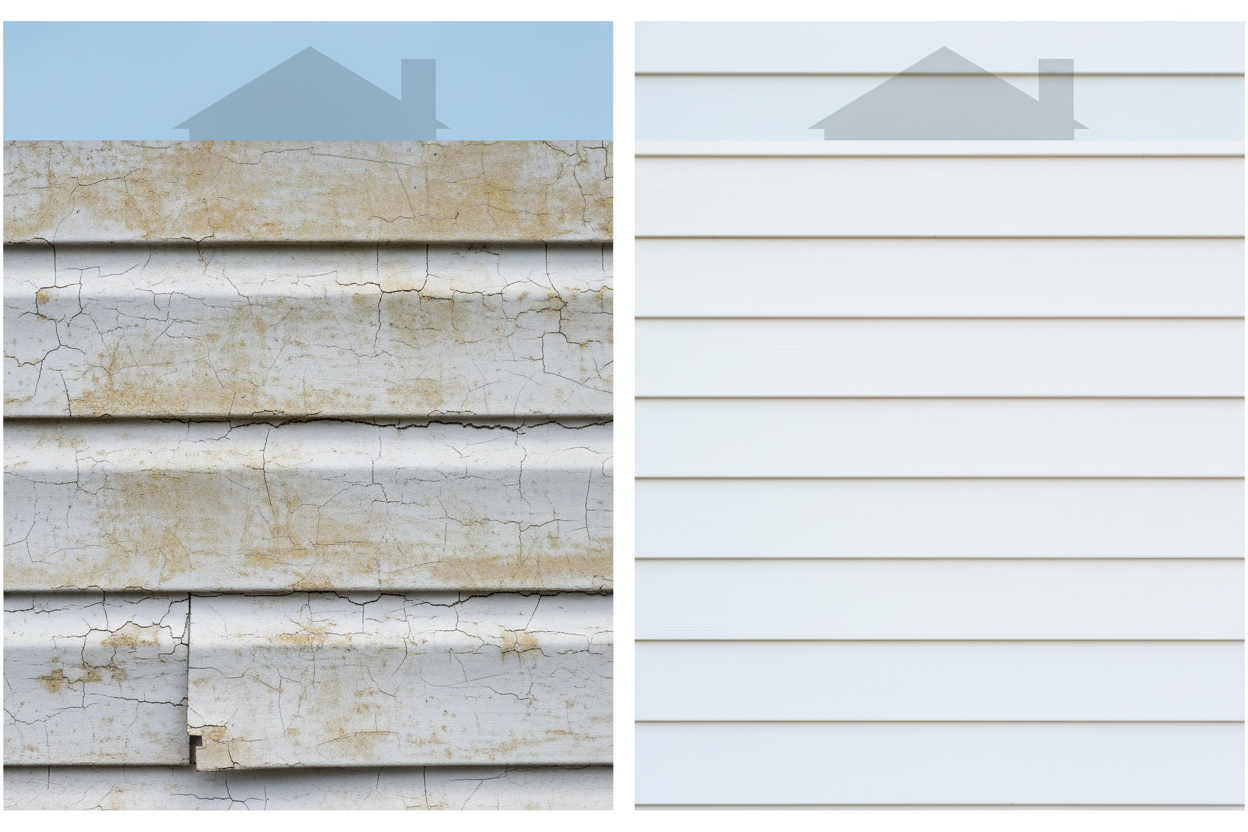
Key indicators include significant fading or color change, cracking or brittleness, warping or buckling, and loose or damaged panels. However, these issues are rare with modern vinyl products and proper installation, typically occurring only after many years of service or due to installation problems.


How much does it cost for vinyl replacement windows Rhome Texas

Replacement window companies Grand Prairie Texas



Affordable home window replacement Greenville Texas




Affordable home window replacement Leonard Texas



Affordable replacement windows Whitewright Texas








How much does it cost for vinyl replacement windows Celina Texas

Home replacement window companies Lake Highlands Dallas Texas


Affordable home window replacement Lindsay Texas











Home window replacement near me Seagoville Texas














Southmayd TX Replacement Siding Installation Services



Farmersville TX Replacement Siding Installation Services



Little Elm TX Replacement Siding Installation Services


Sadler TX Replacement Siding Installation Services